If you’ve ever watched a military landing craft thunder toward a beach under the cover of darkness, or wondered how supply vessels get critical cargo to remote coastal outposts that can’t support standard port infrastructure, you’ve probably wondered: “What is the range of a landing craft?” As someone who’s spent the last 12 years designing, building, and supplying these workhorses for maritime operations around the world, I get this question a lot. It’s not a one-size-fits-all answer, either—range depends on so many factors, from the craft’s size and purpose to how it’s loaded, weather, and even the crew’s operating style. Let me break down what I’ve learned, straight from the shipyard floor to the open water, because this is the stuff that actually matters when you’re planning a mission or coordinating supply runs. Landing Craft

First, I need to clarify what we even mean by “landing craft” here. A lot of people lump every small, shallow-draft vessel that can land on a beach into the same category, but that’s a mistake. We build three primary categories of landing craft, each with totally different range capabilities: personnel and small cargo craft, medium utility landing craft, and heavy landing craft designed for tanks and heavy equipment. I’ll walk through each, because the range numbers shift drastically between them.
Let’s start with the smallest end of the spectrum: the personnel and light cargo landing craft. These are the 10 to 15-meter craft you might see shuttling troops or small batches of supplies between a larger naval vessel (a “mother ship”) and a remote island beach, or moving cargo around a coastal archipelago. When we designed our standard 12-meter personnel landing craft, we optimized it for shallow water first—its draft is just 0.8 meters, so it can glide right onto a sandbar or even a gently sloping mudflat without getting stuck. But that shallow draft comes at a tradeoff: fuel capacity. This craft only has space for 1,200 liters of diesel, so its range isn’t going to be in the hundreds of nautical miles. When fully loaded with 12 troops and 1,000 kg of gear, it cruises at 15 knots, and hits a range of roughly 120 nautical miles. If we trim the load to just the crew and fuel, we can push that to around 180 nautical miles, but that’s a rare case. The sweet spot for these small craft is short hops—20 to 50 nautical miles, like shuttling between a mothership 30 miles off a remote beach or moving supplies between nearby small islands. I’ve had clients ask if we can extend the range on these, and we can, but it requires adding extra fuel tanks that cut into cargo and passenger space, which defeats the whole purpose of a small, nimble landing craft.
Next up is the medium utility landing craft, the workhorse of most coastal operations. This is the 20 to 25-meter craft we build for army and navy supply missions, disaster response, and commercial coastal logistics. These can carry up to 10 tons of cargo: think 2 standard pallets of supplies, a small truck, or 50 troops with full gear. They have a deeper draft (around 1.2 meters when loaded) and much larger fuel tanks—roughly 6,000 liters of diesel. When cruising at their efficient speed of 12 knots (most landing craft don’t need to go fast; they need to be stable and fuel-efficient), their range jumps to 350 nautical miles fully loaded, and up to 500 nautical miles when lightly loaded. That’s a big step up from the small craft, and it makes these medium landing craft incredibly versatile. I remember a disaster relief mission in the Philippines a few years back, after a typhoon knocked out roads and ports on a series of small islands. We deployed six of these medium craft, and they were able to ferry medical supplies, food, and shelter materials from the nearest major port to islands 400 nautical miles away over three days, making stops to refuel at small coastal depots along the way. That’s exactly what these are built for: reliable, medium-range transport to places big ships can’t reach.
Now the big one: heavy landing craft, designed to carry tanks, armored vehicles, and heavy construction equipment. These are the 30 to 40-meter behemoths we build for military operations and large-scale coastal infrastructure projects. A fully loaded heavy landing craft can carry up to 50 tons of cargo—so that’s a main battle tank, two armored personnel carriers, or a 10-ton excavator for a beach construction project. Their fuel capacity is massive, too: up to 25,000 liters of diesel. The tradeoff here is that they’re slower, with a cruising speed of only 10 knots, because they’re built for heavy loads, not speed. But even with that, their range is impressive. Fully loaded with 50 tons of cargo, they have a range of around 700 nautical miles. Lighten the load to just the crew and fuel, and that jumps to over 1,100 nautical miles. I’ve seen these craft cross the entire English Channel nonstop to deliver armored vehicles to a military training exercise, and that’s exactly what their range enables. They don’t need to stop at every small port; they can make longer transits between major coastal facilities or from a mothership far offshore.
Wait, but here’s the thing: those numbers are all in ideal conditions. A lot of people see a range stat online and assume it’s fixed, but that’s just not true. As a supplier, I’ve seen range drop by 30% or more in rough seas, strong headwinds, or heavy loads. If you’re fighting a 20-knot headwind while carrying a full cargo of tanks, that extra drag will burn through fuel way faster than cruising in calm water. We had a client once who tested one of our heavy landing craft in the North Sea during autumn storms, and their actual range was 220 nautical miles instead of the 700 we quoted. They were surprised, but we always make sure to note that range is a variable number, not a hard limit. That’s why when we quote a craft to a customer, we ask them specific questions: what’s their typical load? What waters will they be operating in? Do they need to make long transits or short, frequent runs? Because that changes everything.
Another big factor in landing craft range is whether they’re being operated from a mothership or going directly from shore to shore. When a landing craft is stowed on a larger vessel, it doesn’t need full fuel capacity to make the trip back to shore—it just needs enough to make the run from the mothership to the beach and back, which cuts fuel use a lot. But if a customer needs a landing craft that can operate independently, without a mothership, we can adjust the design to add more fuel tanks, maybe even install a small auxiliary sail or solar panels to boost efficiency, though we have to be careful not to make the craft too big or too draft-heavy to land on shallow beaches. That’s the balance we strike with every build: matching the range to the customer’s actual needs, not just a generic spec sheet number.
I also want to talk about commercial landing craft, because a lot of people only think about military ones, but commercial use makes up half of my business these days. We build landing craft for construction companies working on coastal projects, oil and gas operations needing to transport equipment to remote rig sites, and even tourism companies that take groups to remote beach destinations in places like the Caribbean and Southeast Asia. For these customers, range is usually about balancing cost and capacity. A construction company building a new pier might need to transport a bulldozer from the mainland to a remote island 100 nautical miles away, so we’ll size their landing craft to have a range of 120 nautical miles, just enough for that trip, without wasting money on extra fuel tanks they don’t need. A tourism company might use a small, fuel-efficient landing craft with a range of 200 nautical miles to take guests to hidden coves over a day trip, stopping at a small dock halfway for snacks and refueling.
I’ve seen a lot of new suppliers cut corners on range to undercut prices, but that’s a mistake. Last year, we had a construction client come to us after buying a cheap landing craft from a overseas supplier. They needed to transport a 15-ton excavator 180 nautical miles to a remote reef restoration project. The supplier had quoted a range of 250 nautical miles, but when they loaded the excavator, the actual range dropped to 110 nautical miles—nowhere near enough to make the trip. They ended up having to hire a tugboat to tow the craft the rest of the way, doubling their costs and delaying their project by two weeks. That’s the kind of mistake you make when you don’t work with a supplier who understands how real-world conditions affect range. We always test every craft we build on the water before delivery, run range tests with different loads and sea conditions, and give our customers a realistic number, not a best-case stat that’s impossible to hit in the real world.
So to wrap this up, there’s no single answer to “what is the range of a landing craft,” and anyone who tells you otherwise is either selling you something or guessing. Range varies from 120 nautical miles for a small personnel craft up to over 1,100 nautical miles for a heavy landing craft, depending on size, load, sea conditions, and whether the craft is operating independently or from a mothership. The key is working with a supplier who can match your specific operational needs to the right craft, not pushing a one-size-fits-all model.
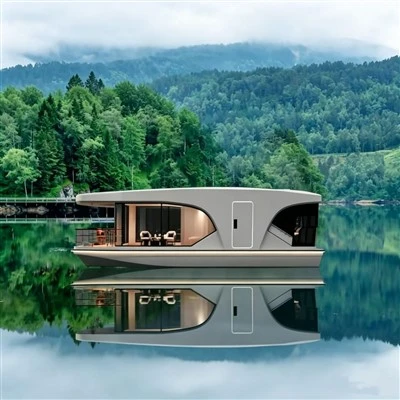
If you’re planning a military mission, a disaster relief deployment, a coastal construction project, or any operation that requires moving cargo or personnel to shallow, hard-to-reach beaches, I’d be happy to walk through your needs, discuss the range options that will work for you, and help you pick the right landing craft for the job. There’s no such thing as a one-size-fits-all solution, but there is a perfect landing craft for every operation—you just need to talk to someone who knows the ins and outs of range, load capacity, and real-world performance.
Catamarans References
- U.S. Navy Naval Sea Systems Command. (2021). Landing Craft, Utility (LCU) Specifications and Operational Range Data.
- International Maritime Organization. (2019). Coastal Craft Safety and Fuel Efficiency Guidelines.
- Society of Naval Architects and Marine Engineers. (2020). Small Vessel Range Calculations for Shallow-Draft Landing Craft.
- Global Disaster Response Maritime Logistics Report. (2022). Landing Craft Performance in Tropical Coastal Environments.
Longkou Jinda Shipping Co., Ltd.
With abundant experience, we are one of the most professional landing craft manufacturers and suppliers in China. Please feel free to buy high quality landing craft made in China here from our factory. We also accept customized orders.
Address: North of Shuangyu Village, Xingjia Sub-district, Longkou City, Yantai City, Shandong Province
E-mail: Leo99999@qq.com
WebSite: https://www.jindaship.com/
