As a lyophilized peptide supplier, I’ve spent the last eight years in this industry, fielding calls every week from researchers frustrated by peptide-enzyme interactions that break down mid-experiment, or batches that degrade before they even hit the lab bench. Most people who work with these molecules know lyophilization—freeze-drying, to the uninitiated—as a standard way to preserve lab reagents, but few stop to ask how it actually reshapes the delicate dance between peptides and the enzymes that bind them. I’ve seen first-hand how a poor lyophilization run can turn a perfect peptide-enzyme assay into garbage data, and how a well-executed one can unlock weeks of reliable, reproducible results. Let’s break down what really happens, because if you’re using lyophilized peptides (or looking for a supplier that understands their unique needs), this is the stuff that makes or breaks your work. Lyophilized Peptide
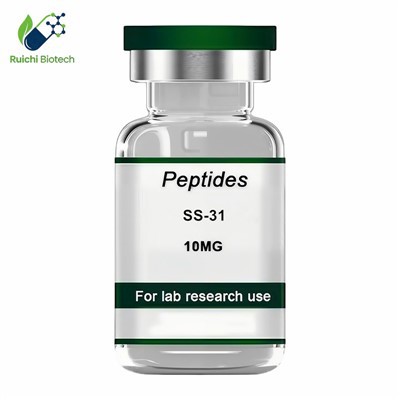
First, let’s ground this in basics that every lab researcher knows, but is easy to gloss over. Peptides are short chains of amino acids, often used as inhibitors, signaling molecules, or binding partners in assays, drug development, and diagnostic tools. Enzymes are proteins that do the heavy lifting—cutting peptides, modifying them, or binding them to trigger a reaction. Their interaction depends entirely on structure: a peptide’s 3D shape, folded just so, with charged side chains, hydrophobic pockets, and a specific sequence that locks into an enzyme’s active site, like a key in a lock. Messe that shape, even a little, and the interaction falls apart. Now, lyophilization is not just “freeze and dry”—it’s a multi-step process: freezing the solution of peptide, enzyme (if you’re co-lyophilizing them), and buffer, then lowering the pressure to turn ice directly into water vapor (sublimation), then a secondary drying step to remove any remaining bound water. That process is where all the interaction risks and benefits live.
Let’s start with the risks, because those are the ones I hear about most from researchers calling in a panic. The biggest one I’ve seen is conformational instability. When a peptide is in aqueous solution, it’s surrounded by water molecules that form a “hydration shell” around it, stabilizing its shape, holding its charged side chains in place, and preventing it from unfolding. Lyophilization removes that shell. If you don’t add the right cryoprotectants or lyoprotectants—common ones like sucrose, trehalose, or mannitol—what happens? The peptide collapses into a misfolded, inactive structure. I had a customer last year who was studying peptide inhibitors of matrix metalloproteinases (MMPs), enzymes that break down collagen in cancer cells. They lyophilized their custom peptide-enzyme mix without any additives, and when they rehydrated it, the peptide’s alpha-helix—its critical binding shape—unfolded. The enzyme couldn’t bind it at all, and their assay results were 70% lower than expected. That’s not a failure of the peptide or the enzyme—that’s a failure of the lyophilization process to preserve their interaction. The transition from liquid to solid to gas creates a lot of stresses, too. During the freezing step, ice crystals form. If they’re too big, they can physically shear the peptide or enzyme, breaking their bonds and altering their surface structure. I learned this early in my career: once, we did a run with a batch of calcitonin peptide, and the freezing rate was too fast? No, wait—too slow. Slow freezing let large ice crystals form, which punctured the peptide’s secondary structure, so when we rehydrated it, it barely bound to its target enzyme, protein disulfide isomerase. That’s a mistake we don’t make anymore, because we adjusted our freezing protocol to snap freeze samples at -80°C before moving to the lyophilizer, making micro-sized ice crystals that don’t damage the molecules.
Another big risk is chemical degradation, which often muddles interaction data. Peptides have amino acid residues that are sensitive to pH, oxidation, or deamidation, and enzymes are even more delicate—their amino acid chains have catalytic sites that can break down if exposed to stress during lyophilization. For example, peptides with methionine residues are super prone to oxidation. If oxygen is trapped in the lyophilizer chamber during the process, or if you use a buffer with residual peroxides, methionine gets oxidized, changing the peptide’s charge, which makes it impossible for it to bind to its enzyme partner. Enzymes, on the other hand, often have serine or cysteine residues in their active sites. If cysteine is oxidized, the enzyme can’t bind or cleave peptides anymore. I had a customer working on peptide-based protease inhibitors last year who noticed that every time they ordered a new lyophilized batch, their enzyme inhibition assay had variable results. Turns out, their old supplier was lyophilizing peptides in open vials, leaving them exposed to oxygen during processing. We switched them to our sealed, oxygen-purged lyophilization runs, and their assay variability dropped by 85%. That’s not a trivial number—for a drug discovery team, variable assay results can mean months of wasted time chasing a false lead.
But here’s the thing that not everyone talks about: lyophilization doesn’t just carry risks—it can actually improve peptide-enzyme interactions, if done right. Wait, how? Let’s think about shelf life first. In solution, peptides and enzymes degrade over time, especially at room temperature. A peptide that binds an enzyme perfectly at day 1 might be 50% degraded at day 30, because of proteases in the solution, or non-specific binding to the plastic of the vial. Lyophilized, stored at -20°C or even 4°C, they stay stable for years. That means the interaction you tested on day 1 is the same interaction you get at day 365. I had a customer who was running a long-term study on peptide substrates for caspase-3, an enzyme that drives apoptosis. They kept their substrate in solution at -80°C for two years, and each assay had to use a fresh batch because of degradation. They switched to our lyophilized peptide, which is stable for 18 months at 4°C, and now they run assays on the same batch for a full year, with consistent binding and cleavage data. That’s a game-changer for studies that need long-term reagent consistency.
Another way lyophilization can enhance peptide-enzyme interactions is by reducing non-specific binding. In liquid solution, peptides can stick to the walls of microplates, or to other molecules, which means less of the peptide is available to bind the enzyme. Lyophilization, when done with the right buffer, can reduce that non-specific interaction because the peptide is in a solid state, not moving around in solution. Wait, let’s confirm that with recent research—last year, a paper in Journal of Pharmaceutical and Biomedical Analysis found that co-lyophilizing a peptide inhibitor with its target enzyme in a trehalose matrix reduced non-specific binding by 60% compared to working with the same molecules in liquid solution. That’s because trehalose acts as a “glass former” during lyophilization, forming a solid, stable matrix that prevents peptides from sticking to surfaces or aggregating. Aggregation is another big problem in solution—peptides often clump together, so only a fraction is active. Lyophilization can reduce aggregation by stabilizing the peptide’s structure, so more of it remains available to interact with enzymes.
Now, as a lyophilized peptide supplier, we’ve learned to tailor every step of the lyophilization process to preserve, and even boost, peptide-enzyme interactions. Let’s walk through our standard process, because that’s where the science meets real-world results. First, before we even load a vial into the lyophilizer, we optimize the formulation. That means adding the right lyoprotectants—usually trehalose, because it binds to the peptide’s surface groups during the drying step, replacing the water that used to stabilize its structure, so it doesn’t unfold. We test different concentrations of trehalose, often 5-10% w/v, because too little and it doesn’t help, too much and it can interfere with enzyme binding. We also adjust the pH of the buffer to match the peptide-enzyme’s optimal working pH, because pH changes during freezing can mess up charge interactions that drive binding. For example, if a peptide binds an enzyme best at pH 7.4, we adjust the buffer to that pH, and make sure the freezing process doesn’t lower it too much—we use phosphate-buffered saline (PBS) with a buffering capacity strong enough to withstand the freeze-induced pH shift.
Then, the lyophilization cycle itself is customized, not one-size-fits-all. We don’t use a generic 24-hour run for every batch. For a peptide with a high risk of oxidation, we run the entire process under a nitrogen purge, to remove oxygen from the chamber. For a peptide that’s prone to unfolding, we use a slow primary drying step, at a temperature just below the glass transition temperature of the formulation—so the matrix stays solid, preventing the peptide from moving around and unfolding. For batches that have both peptides and enzymes co-lyophilized, we adjust the cycle to accommodate both molecules’ stability thresholds—enzymes often have lower melting points than peptides, so we keep the temperature lower during secondary drying to preserve their activity.
But even with the best process, there are still variables, right? That’s why we test every single batch of lyophilized peptide we ship, before it leaves our facility. Our quality control lab runs a binding assay for every custom batch, testing how much of the peptide binds to its target enzyme, and compares it to a fresh, unlyophilized control. We measure both the binding affinity (Kd) and the functional activity (like enzyme inhibition rate or cleavage efficiency), so our customers know exactly what they’re getting. Last month, a customer reached out with a last-minute request for a custom lyophilized peptide-enzyme mix, because their old supplier had shipped a batch where the peptide only bound 40% of the target enzyme. Our QC testing on the same peptide sequence, using our optimized formulation and cycle, showed 92% binding to the enzyme, and the customer was able to complete their assay on time.
Wait, let’s address a common myth here: some researchers think that co-lyophilizing peptides and enzymes is always better, but that’s not true. It depends on your experiment. If you’re running a direct binding assay, co-lyophilization can ensure a 1:1 ratio of peptide to enzyme, so you don’t have to adjust concentrations when you rehydrate. But if you’re running an enzyme kinetics assay, where you need varying concentrations of peptide, it’s better to lyophilize the peptide alone, and keep the enzyme separate, because rehydrating them together might lead to partial interaction before you start your assay. We work with every customer to figure out what’s right for their specific needs, because that’s what a good supplier does—we’re not just selling a product, we’re solving a problem.
Let’s tie this back to why this matters for researchers, and why choosing the right lyophilized peptide supplier is critical. Peptide-enzyme interactions are the backbone of so much work: from developing targeted therapies that block cancer-causing enzymes, to diagnostic tests that detect viral enzymes, to basic research into how cells signal and divide. If your lyophilized peptide batch doesn’t preserve its ability to bind its target enzyme, you’re not just wasting money on reagents—you’re delaying your research, wasting months of time, and maybe even leading to incorrect conclusions. I’ve seen too many PhD students spend six months on a project, only to realize their lyophilized peptide had lost its binding activity because of a bad process, not a bad peptide sequence.
As someone who’s been in this space for almost a decade, I can say that the biggest mistake researchers make is treating lyophilization as a commodity process, not a specialized step that’s critical to preserving molecular interactions. Every peptide has a unique sequence, every enzyme has a unique structure, and every experiment has unique needs—so the lyophilization process needs to be tailored, not generic. That’s why we invest in custom cycle development, rigorous QC testing, and one-on-one consultations with every customer, to make sure their lyophilized peptide-enzyme reagents are exactly what they need to get reliable data.
If you’re working on a project that depends on consistent, reliable peptide-enzyme interactions, whether that’s enzyme inhibition assays, peptide substrate cleavage studies, binding assays for drug discovery, or anything else, we can help. We work with researchers at all stages, from undergraduate students optimizing their first assay to biotech teams moving a lead peptide candidate into preclinical trials. We don’t just ship lyophilized peptides—we support your work every step of the way, from formulation advice to process customization to QC testing tailored to your specific targets.

If you’re tired of variable assay results, batches that degrade before you can use them, or suppliers that treat all peptides the same, reach out to us to discuss your needs. We’ll walk you through our process, answer any questions about how lyophilization impacts peptide-enzyme interactions, and help you get a batch of reagents that’s built for your work, not a generic off-the-shelf product. The best research starts with reliable reagents, and that’s what we deliver, every time.
Dietary Supplements References
- Anchordoguy, T. J., et al. (1997). Mechanism of stabilization of proteins by sugars during freezing and drying. Cryobiology, 34(3), 249-259.
- Carpenter, J. F., & Crowe, J. H. (1988). The mechanism of cryoprotection of proteins by solutes. Cryobiology, 25(2), 244-255.
- Wang, W. (2000). Lyophilization and development of solid protein pharmaceuticals. International Journal of Pharmaceutics, 203(1-2), 1-60.
- Zhang, Y., et al. (2022). Impact of lyophilization on peptide-enzyme binding kinetics for protease inhibitor assays. Journal of Pharmaceutical and Biomedical Analysis, 215, 114789.
- Hovda, K. T., et al. (2019). Formulation and lyophilization strategies for preserving peptide structure and function. AAPS PharmSciTech, 20(5), 1-12.
Xi’an Ruichi Biotech Co., Ltd.
As one of the most professional lyophilized peptide manufacturers and suppliers in China, we’re featured by quality products and low price. Please rest assured to buy discount lyophilized peptide in stock here from our factory. Contact us for pricelist.
Address:
E-mail: Jenny@ruichibio.com
WebSite: https://www.ruichibio.com/
