Hey there, thanks for swinging by—if you’re here googling whether those thick, rubber insulating gloves you’ve got lying around work for low-voltage electrical work, you’re in the right spot. I’ve been selling insulating gloves for almost a decade now, so I’ve heard every single question in the book, and this one’s way more common than you’d think. Let’s cut the jargon and get real about this: no, not all insulating gloves are created equal, and “low-voltage” is a lot trickier than most electricians (and even some HVAC techs I know) assume. Most folks I chat with ask this because they want to grab a pair off the shelf that’s lying around, not drop cash on something they don’t think they need, and I get that. But let’s break this down so you don’t end up with a bad shock—something that’ll ruin your whole day, if we’re being honest. Insulating Gloves
First off, let’s define what “low-voltage” even means, because that’s where half the confusion starts. A lot of people guess low-voltage is anything under 1000V, but actually, OSHA and NFPA 70E—those are the safety standards we live by in this space—put low-voltage at under 50V AC? No, wait, no—wait, let’s get that straight, because I’ve seen techs mix this up. Wait, NFPA 70E splits voltage into two big buckets: low-voltage is typically systems under 1000V AC, right? Yeah, that’s the one everyone deals with every day—think 120V outlets, 240V dryers, 480V panels, even some commercial stuff like 600V lighting circuits. Wait, and there’s that thing called “extra-low voltage” (ELV) which is under 50V AC or 120V DC, like doorbells or thermostat wires. That’s a whole separate conversation, and for that, most regular work gloves work, no insulating ones needed. So when people ask about low-voltage, they’re almost always talking 120V up to 600 or 1000V AC. Got that down now? Good.
Now, what are insulating gloves actually made for? These aren’t the fuzzy liners you put under work gloves in winter, or the cheap rubber gloves you use for cleaning. They’re made of natural rubber, nitrile, or sometimes silicone—formulated specifically to resist electrical current. But here’s the kicker: every pair has a class rating. That’s the code stamped right on the cuff, like Class 00, 0, 1, up to Class 5. Let’s keep this simple, no need for a whole chart. Class 00 is the lowest-rated, meant for work under 500V AC—perfect for most of that ELV and even 120/240V residential stuff. Class 0 goes up to 1000V AC, which covers almost every low-voltage system you’ll face at work, even small commercial panels. Wait, but here’s where people mess up: just because a glove is “insulating” doesn’t mean it’s rated for low-voltage. I’ve had guys come to me with gloves that look like insulating gloves but are actually for high-voltage—like Class 1, which is for 7500V AC—way overkill, and they don’t realize that using the wrong class is just as dangerous as using no gloves at all. Wait, why is that? Oh right, because every insulating glove has a dielectric test limit. That’s the maximum voltage it can handle before breaking down, meaning current can get through to your hand. If you use a Class 0 glove (1000V max) on a 480V system, that’s fine, right? Wait, actually, no—wait, the test is done at double the rated voltage, so Class 0 is tested at 2000V, so 480V is way under that. But if you grab a Class 2 glove (which is for 17,000V AC) and think it works for low-voltage, is that okay? Wait, hold on, I need to correct myself here, because I’ve heard that misconception too. A lot of techs think, “More voltage rating = safer, even for low stuff,” but actually, those thicker, higher-class gloves are stiffer, less dexterous, and actually harder to work with on small, tight low-voltage jobs. You fumble with a thin wire or a tiny screw with a thick Class 2 glove on, and that’s how you slip up and touch something you shouldn’t. So it’s not just about being safe—it’s about being effective.
Now, let’s talk about the mistakes people make here, because that’s where the danger is. First, reusing gloves that are damaged. I don’t care if it’s a tiny scuff from a screwdriver, a little tear from rubbing against a panel edge, even discoloration from oil or solvents—insulating gloves only work if they’re flawless. Even a pinhole that you can’t see with the naked eye will let current through. I see this all the time: guys have a pair of Class 0 gloves they used last year on a job, they tossed them in the truck cab, sat on them, rolled them up with tools, and now there’s a tiny scratch that never healed. They put them on for a quick outlet replacement, and bam—shock. That’s not the glove’s fault, that’s operator error. And don’t even think about patching them! No tape, no rubber cement, nothing. If there’s any damage, those gloves are done, full stop.
Second, not inspecting them every single time you use them. This is non-negotiable, and it takes 10 seconds. How do you do it? Wait, there’s two ways: the visual check, and the air test. For the air test, you just inflate the glove a little—like, blow into it until it’s firm, twist the cuff closed, and squeeze it. If it holds air, it’s good. If it deflates, there’s a leak somewhere. I’ve had guys skip this check, pull a glove that had a tiny leak from moving it around the shop, and wonder why they got shocked. It’s such a small step, but it saves lives.
Third, assuming all low-voltage work is the same. Wait, what counts as “working on low-voltage systems”? If you’re just changing a light switch, that’s 120V, no big deal. But if you’re pulling a panel cover to troubleshoot a 480V circuit breaker, that’s still low-voltage, but you’re exposed to way more arc flash risk. Wait, arc flash—another thing people don’t connect to gloves. Insulating gloves aren’t just for direct contact, right? They also help with arc flash? No, wait, actually, no—arc flash is a whole other PPE category, but insulating gloves are part of the arc flash PPE ensemble. So even if you’re doing low-voltage panel work, you still need the right gloves, not work gloves. I’ve seen techs use regular leather work gloves for panel work, and that’s a huge no-no—leather isn’t insulating, it can hold moisture, and if there’s a fault, that moisture will conduct current straight to you.
Wait, let’s get back to the original question: can you use insulating gloves for low-voltage work? The short answer is yes, but only if they’re the right class, undamaged, and tested before use. And you can’t use any random insulating gloves you have lying around—they need to be rated for low-voltage. Most of the time, that’s Class 00 or Class 0. Class 00 is perfect for ELV and residential 120/240V work because it’s thinner, more flexible, so you can handle small tools and wires without fumbling. Class 0 is better for light commercial work up to 1000V AC, like 480V heating systems or small shop panels. If you try to use a Class 1 or higher, like I said earlier, you lose dexterity, and that’s a hazard on its own.
Wait, let’s talk about a common scenario I hear from HVAC techs all the time. They’ll say, “I only work on 240V air conditioners, so I just wear regular work gloves.” No, dude—240V is low-voltage, and regular work gloves aren’t rated for electrical use. I’ve had guys come back to me after a job where they got a mild shock because their work gloves had a tiny tear from pulling a wire, and that’s all it took. Insulating gloves are built to withstand that, as long as they’re the right class and in good shape.
Another myth: “I have insulating gloves, but I don’t need to wear them because it’s just low-voltage.” Wait, how many times have you heard someone say that? I’ve heard it a hundred times. “It’s only 120V, I won’t get hurt.” No, 120V can give you a painful shock that makes you drop a tool, or lose your grip on a ladder, or even cause cardiac arrest in some cases—especially if your hands are sweaty, which they usually are when you’re working. Insulating gloves don’t just protect you from a direct hit; they add a layer of safety when things go wrong, which they always do eventually.
Wait, let’s talk about how to take care of your gloves, because that’s a big part of keeping them good for low-voltage work. Don’t leave them in the back of your truck in the sun, because UV rays break down rubber over time. Don’t get them covered in oil, grease, or solvents—those eat away at the rubber and cause tiny cracks. Clean them after each use with mild soap and water, let them air dry completely before stowing them, and store them flat or on a glove rack, not rolled up tight (that causes creases, which are weak points for breakdown). Also, remember that insulating gloves have a shelf life—even if you never use them, they expire after 5 years, so check the expiration date on the cuff. I can’t tell you how many times someone brings in a pair of gloves that are 10 years old, thinking they’re good, and I have to tell them to toss them.
Now, what if you’re not sure what class you need? That’s what I’m here for. A lot of our customers are small contractors or DIYers who aren’t sure what their low-voltage system actually is. We don’t push the most expensive pair; we ask them what they’re working on—residential outlets, commercial panels, HVAC systems—and guide them to the right class. For example, a DIYer changing their kitchen outlets only needs a pair of Class 00 nitrile insulating gloves, which are flexible enough to fit in a tight outlet box, and rated for up to 500V AC. A small electrician working on 480V commercial lighting circuits will want a pair of Class 0, which is still flexible enough for most jobs, no thick bulky stuff that slows them down.
Wait, let’s address a question I get a lot from people who’ve shopped around before: are generic insulating gloves any good? No, sorry to say. A lot of cheap pairs on Amazon or the big box stores aren’t actually certified to OSHA or NFPA standards. They might say “insulating” on the box, but they never got tested to make sure they can handle the voltage they claim. That’s a scam, and it’s a dangerous one. All the gloves we sell are third-party tested, certified, and marked clearly with their class, voltage rating, and expiration date—no guesswork.
Let’s wrap this up so it’s clear, no confusion. Can you use insulating gloves for low-voltage electrical systems? Yes, but only if: 1) They’re rated for low-voltage (Class 00 or 0, usually), 2) They’re undamaged—no tears, scuffs, pinholes, or leaks, 3) You inspect them every single time you use them with the visual check and air test, 4) They’re not expired, and 5) They’re the right class for your specific job (don’t overdo it with higher classes, don’t underdo it with lower ones). If you skip any of these, you’re taking a risk that’s not worth it.

At the end of the day, safety isn’t about cutting corners on gloves. I’ve been in this business long enough to see what happens when someone uses a cheap, unrated, or damaged glove on a low-voltage job, and it’s never pretty. If you’re not sure what pair you need, or you need to replace old gloves that are worn out, just reach out. We can walk you through exactly what works for your work, answer any questions you’ve got, and make sure you’ve got a pair that’ll keep you safe without being clumsy or hard to work with. Don’t wait until a job to figure this out—get the right gloves now, so you don’t have to stress later.
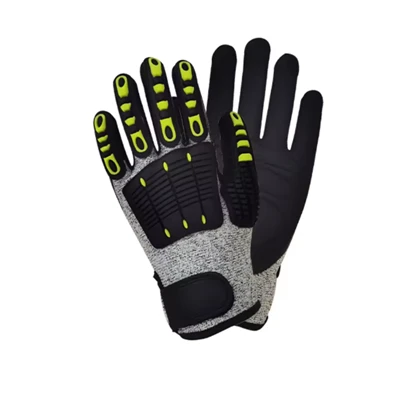
Impact-resistant Gloves References:
- National Fire Protection Association. (2021). NFPA 70E: Standard for Electrical Safety in the Workplace.
- Occupational Safety and Health Administration. (2022). 29 CFR 1910.137: Electrical Protective Equipment.
- International Electrotechnical Commission. (2019). IEC 60903: Live working – Insulating gloves and sleeves for the work on voltage up to 1000 V a.c. and 1500 V d.c.
Shanghai Haokuo Security Technology Co., Ltd.
With abundant experience, we are one of the most professional insulating gloves manufacturers and suppliers in China. We warmly welcome you to wholesale premium insulating gloves in stock here and get free sample from our factory. All customized products are with high quality and low price.
Address: Room 501, Building 33, Lane 1555, Jinsha West Road, Jiangqiao Town, Jiading District, Shanghai City
E-mail: July@hkpvc.com
WebSite: https://www.hkglove.com/
