When I first started my career in power transmission towers nearly two decades ago, I never imagined that the steel structures I design, manufacture, and ship across the country would have such a direct, often underdiscussed, impact on aviation safety. For years, I’d hear our sales team talk about meeting load requirements, corrosion resistance, and compliance with national grid standards—but it wasn’t until a 2018 project near a regional airport in the Midwest that I truly began to dig into how our towers interact with low-flying aircraft. That project led me to work closely with local aviation authorities, pilots, and air traffic control experts, and today, addressing aviation safety is just as much a part of what we do as fabricating a tower that stands up to 100-mph winds. Power Transmission Tower
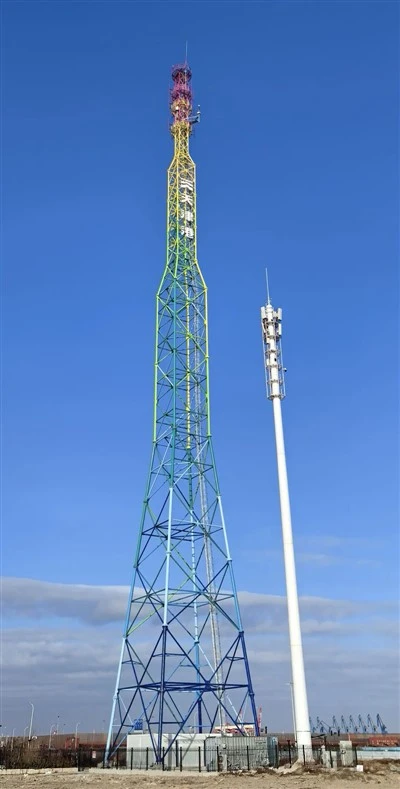
Let’s start with the basics: power transmission towers are tall steel frameworks, usually between 50 and 200 feet high, that carry high-voltage power lines from power plants to distribution centers. They’re everywhere, crisscrossing rural areas, skirting urban edges, and even cutting through suburban zones. For small general aviation planes—think single-engine prop planes, crop dusters, and helicopter charter services—these towers are a distinct hazard, especially when they’re located in areas with low visibility, remote airstrips, or restricted airspace. Commercial airliners fly at altitudes of 30,000 feet and above, so towers rarely pose a threat to them, but for the 190,000 general aviation flights recorded in the U.S. each year, per the Federal Aviation Administration (FAA), towers are a leading cause of controlled flight into terrain (CFIT) accidents, along with mountains and towers. A 2022 FAA report found that 12% of all general aviation accidents involved collisions with obstructions, and 70% of those collisions were with power lines or their supporting towers. Those numbers stuck with me because they’re not just statistics—they’re the reason our team spends extra hours designing, testing, and communicating about every tower we produce.
One of the biggest misconceptions people have is that most tower-related aviation accidents are caused by pilots who aren’t paying attention. That’s true in some cases, but there are structural and human factors that go way beyond pilot error. For example, many rural airstrips were built before modern aviation mapping standards existed. A farmer might have a small strip next to their land, and if a power company puts a new transmission line 100 feet from the runway’s approach path, that’s a problem. Crop dusters, who fly low and slow over fields to apply pesticides, often operate in exactly the kind of low-altitude airspace where towers are placed. I remember a conversation with a crop duster pilot in Iowa a few years back who told me he’d had to swerve to avoid a new tower that popped up outside his usual route—swerving meant he nearly crashed into a tree line, and he said he still has nightmares about it. That’s the kind of on-the-ground experience that doesn’t make it into industry reports, but it’s the stuff that drives us to adapt our designs.
Another factor is tower visibility. A steel tower that’s unmarked, especially at night or in fog, is nearly impossible to see from the cockpit of a small plane. The FAA has strict rules for lighting on obstructions taller than 200 feet: they require red aviation lights that flash to mark the structure. But for towers between 50 and 200 feet, the rules are less clear. Many states don’t require aviation lighting for towers under 150 feet, particularly in rural areas where local officials argue that the towers are “low enough” to not be a hazard. That’s a mistake, in my view. A 150-foot tower is just as dangerous as a 250-foot one when you’re flying at 50 feet off the ground, which is a typical altitude for crop dusters or small planes approaching a short runway. We’ve had clients come to us after a local tower was hit by a small plane, and the problem almost always boils down to poor visibility—no lights, no clear markings on the ground, and no updates to aviation charts when a new tower goes up.
That’s why our team has invested in custom visibility solutions for towers, even when they’re not required by regulation. We work with clients to install high-visibility marking tape on the crossarms of towers, especially on towers near airstrips or low-altitude flight paths. We also coordinate with aviation mapping services to make sure every tower we fabricate is added to the official FAA obstacle database, which is what pilots use to plan their routes. A few years ago, we developed a solar-powered LED light system for smaller towers that don’t meet the 200-foot height threshold—these lights are brighter than standard runway lights, and they’re designed to run for 72 hours on a single charge if the sun doesn’t shine for a few days. We don’t have to sell these lights, but we do because it’s the right thing to do.
Of course, there’s also the technical side of tower design that affects aviation safety. When we design a tower, we have to account for more than just wind and weight—we have to consider how the tower’s structure will appear on a pilot’s radar. Many small planes are equipped with basic radar systems, not the sophisticated weather radar used by airliners. A steel tower can create a strong radar return, which can obscure other objects or make the tower hard to distinguish from the ground or clouds. To address that, we’ve started using radar-absorbent materials in the lower sections of towers that are closest to low-altitude flight paths. It adds a small cost to each tower, but our clients who work near aviation hubs tell us it’s been a game-changer for reducing near-misses.
I should also talk about the process we go through when a client tells us a tower is near an airport or a flight path. It’s not just fabricating a steel frame—it’s a collaborative process. We start by collecting data on the local airspace, talking to the local aviation authority, and even meeting with local pilots to understand their routes and common flight patterns. For example, last year we worked on a project in Texas where a new residential development was built near a small general aviation airport. The developer initially wanted a 180-foot tower to save on costs, but after we mapped the airport’s approach path, we realized a 180-foot tower would sit directly in the path of planes making their final approach. We worked with the power company, the developer, and the aviation authority to adjust the tower’s design—lowering it slightly, adding extra lighting, and adjusting its position 50 feet away from the original plan. That project turned out to be a model for balancing power needs with aviation safety, and the developer even reached out to us later to use the same approach on another project.
But it’s not all about adjusting tower designs. There are systemic issues that the industry is still working to fix. For one, many older transmission lines were built before modern aviation safety standards, and as more small airstrips are established or reactivated, old towers that were once far from flight paths are now in danger zones. We’ve worked with several utility companies on “obstruction remediation” projects, where we retrofitted old towers with lighting and marking systems, rather than having to tear them down and start over. Tearing down a 100-year-old tower is not only costly but also disruptive to power distribution, so retrofitting makes a lot of sense for both utilities and aviation safety.
Another challenge is airspace that’s not well-documented. Many rural flight paths are informal—pilots use local roads, field markers, and landmark trees to navigate, rather than official charted routes. That means a new tower that’s not marked on any official chart can pop up in the middle of a commonly used flight path, without anyone knowing until there’s a near-miss. Our team has made it a priority to reach out to local pilot associations in every region we work in, not just during a project but on an ongoing basis. We host workshops to explain how we design our towers, what safety features we add, and how pilots can report any hazards they see to the FAA. Last year, a pilot in Wisconsin reached out to us after noticing that a tower we’d installed a year earlier had lost one of its lights. We replaced the light within 24 hours, before it could cause a problem. That kind of communication is what makes a difference.
I won’t pretend that power transmission towers don’t pose a risk to aviation safety. They do, and it’s our responsibility as manufacturers to mitigate that risk as much as possible. But what I can tell you is that the industry is shifting—from seeing towers as just steel structures to seeing them as part of a complex network that includes power grids, communities, and aviation. We’re not just a tower supplier; we’re a partner in both energy infrastructure and public safety.
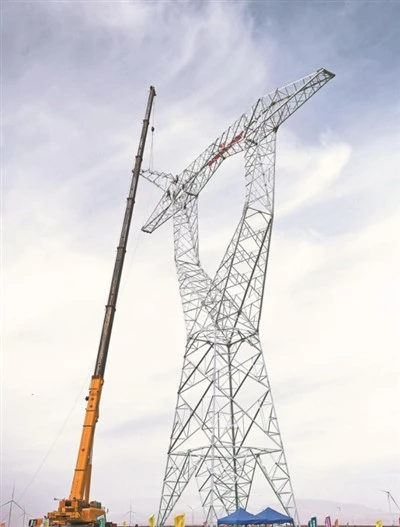
If you’re a utility company, a construction firm, or a developer working on a project near an airport or flight path, I encourage you to reach out to our team. We don’t just sell towers—we work with you every step of the way to make sure your project meets all safety standards, including aviation safety. Whether you need a custom-designed tower with visibility features, a retrofit for an existing structure, or guidance on coordinating with aviation authorities, we have the experience and expertise to help. Let’s work together to build energy infrastructure that powers communities without putting lives at risk.
Angle Steel Tower References
- Federal Aviation Administration. (2022). General Aviation Accident Statistics. U.S. Department of Transportation.
- National Transportation Safety Board. (2021). Controlled Flight Into Terrain: Obstruction-Related Accidents. NTSB Report No. NTSB-GAR-21-001.
- International Association of Electrical Inspectors. (2020). Power Transmission Tower Safety Standards for Aviation. IAEC Technical Bulletin 472.
- Federal Aviation Administration. (2019). Obstacle Marking and Lighting Requirements. FAA Order JO 605.1B.
- Crop Pilots Association of America. (2022). Operational Hazards for Low-Altitude Agricultural Aviation. CPAA Safety Report 009.
Hunan Zhubang Hongsheng Construction Technology Co., Ltd.
As one of the most professional power transmission tower manufacturers and suppliers in China, we’re featured by quality products and good price. Welcome to buy high-grade power transmission tower made in China here and get quotation from our factory. Customized orders are welcome.
Address: Lutang Village, Yong’an Town, Liuyang City, Changsha City, Hunan Province, Hunan Zhubang Hongsheng Construction Technology Co., Ltd.
E-mail: 19898838989@163.com
WebSite: https://www.chinaenerto.com/
