Hey there, fellow industry folks and anyone who’s ever stared at an aerial work platform (AWP) control panel wondering, “Can I crank this up or slow it down? I swear this thing moves faster than my uncle at a family cookout when the burgers hit the grill.” If that’s you, you’re in the right place. I’ve been selling AWPs for over 8 years now, and trust me, this question comes up every single week—usually from new site managers who just got their first lift and are stressing about jobsite safety, old heads who’ve been around the block and know a thing or two about customization, and even some curious DIY types who rented a lift for a gutter job and now want to modify it (spoiler: don’t do that without asking a pro). Let’s break this down straight, no fancy jargon, no textbook fluff—just real talk from someone who’s seen AWPs save the day and cause headaches when speed is off. Aerial Work Platform
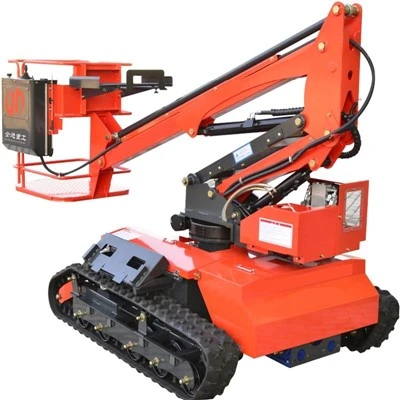
First off, let’s get one thing straight: Not all AWPs are built the same. If you’ve got a tiny, push-around scissor lift for trimming trees in a backyard, that’s way different from a rough-terrain boom lift hauling a crew 80 feet up on a construction site. So when someone asks, “Can you adjust the speed?” the short answer is… it depends. But let’s go deeper, because that “depends” is the stuff that keeps me up at night (along with late-night orders for storm damage cleanup and my cat knocking over my coffee on the way to a job demo).
Let’s start with the basics of how these things move. Most AWPs—whether scissor, boom, or vertical mast—use either hydraulic systems or electric motors to drive the wheels. Hydraulic lifts are the old reliables: they use fluid pressure to power movement, and their speed is controlled by how much fluid flows through the system. Electric ones? They use motors, usually DC or AC, and their speed is tied to how much power you send to the motor. Now, the factory settings: manufacturers set these speed limits for a reason. For indoor lifts, they’re often capped at like 3-5 mph, because you’re weaving around pallets, people, and tight warehouse corners. Rough-terrain boom lifts? Sometimes up to 15 mph, but only when they’re on flat, open ground—if you’re on a slope, that speed drops automatically to keep you from tipping. That’s not a lazy setting, that’s safety tech.
But here’s the part everyone actually cares about: Can you change that factory limit? The answer is YES, most of the time—for most AWPs that are less than 10 years old. Wait, why only “most”? Old-school hydraulic lifts from the 90s? You could technically adjust the flow valve, but that’s like revving a lawnmower to go faster—you’re asking for leaks, overheating, or the thing just dying mid-job. Newer lifts, though? They’ve got electronic control modules (ECMs) that act like the lift’s brain. Those ECMs have programmable settings, including drive speed. That’s where the fun (and the customization) starts.
Let’s talk about real examples, because numbers mean nothing without context. Last year, we had a customer who does window installation on multi-story commercial buildings. He was using 50-foot boom lifts, and his guys were taking forever to move between windows on the same floor—factory speed was 4 mph, which meant he’d burn 20 minutes per floor just driving back and forth. He came to us stressed because he was missing deadlines, and he didn’t want to buy a whole new lift. We hooked him up with a tech who re-flashed his lift’s ECM to bump up the drive speed on flat ground to 6 mph. That cut his floor time by a third, and he didn’t have a single safety issue in the 6 months since. But wait—we didn’t just crank it up to 10. We kept the speed limited to 3 mph when the boom was extended more than halfway, and 1 mph when the lift was on a slope steeper than 5 degrees. That’s non-negotiable, right? Speed adjustments don’t mean reckless driving.
Another example: a school district we work with. They use tiny push-around scissor lifts for changing lightbulbs in gyms and auditoriums. The factory speed was 2 mph, which was fine when they were rolling down a empty hallway, but when they had kids or custodians moving stuff, it was too slow. They didn’t need to go faster—they just needed to adjust the sensitivity of the controls, so when an operator pushes the joystick, the lift responds quicker instead of lagging. That’s another type of adjustment we do, and it’s super common for people who think “speed adjustment” only means going faster, but sometimes it’s about making the lift work for your site, not the other way around.
Now, let’s get into the fine print, because I don’t want anyone getting hurt. First: you can’t adjust speed on every lift. We get requests all the time for old, beat-up lifts people bought at auction, and half the time, they don’t have an ECM—just old hydraulic valves that you can’t adjust safely. Also, OSHA has rules here, people. If you modify a lift’s speed and something goes wrong, you’re on the hook, not the manufacturer. That’s why we never let a customer mess with the ECM themselves—we send a certified tech, we log the adjustment in the lift’s service records, and we make sure all safety interlocks are still working. If you try to do it on your own, you might disable the tilt sensor, or the overload protection, and that’s a lawsuit waiting to happen (not to mention someone getting hurt).
Then there’s the question of when you shouldn’t adjust speed. Let’s say you’re on a narrow construction site with a bunch of people running around, or you’re on uneven ground, or you’re working at height with the boom extended. Cranking up the speed there is just stupid. I once had a customer who tried to adjust his 80-foot boom lift to 18 mph, and his first day using it, he hit a pile of concrete blocks, damaged the tire, and totaled a section of guardrail. I showed up to fix the tire, and he was mad at me for “making his lift too slow”—but when I showed him the footage from the on-board camera, he realized he was going way too fast. That’s the thing about speed: it’s not a one-size-fits-all number. It’s about matching the speed to the job, not just the lift.
Wait, what about different types of speed? Oh right—most AWPs have two speed settings: travel speed and working speed. Working speed is how fast the boom or the scissor lifts up and down, right? A lot of people mix that up with drive speed. Working speed is almost never modified, because that’s tied to how stable the lift is when it’s elevated. If you make the boom go up faster, the lift will sway, and that’s a huge safety hazard. We get that question all the time, and the answer is no—working speed is factory-set for a reason, don’t touch it.
Now, let’s talk about the recent tech stuff, because that’s changed the game. Some new AWPs now have variable speed control right on the joystick. That means you can push the joystick a little for slow speed, all the way for fast speed, instead of having two fixed settings. That’s way better than adjustable fixed speeds, because it gives operators more control. We sold 12 of those variable-speed scissor lifts to a catering company last month, and their guys love it—they can crawl through a crowd at 1 mph to plug in lights for a wedding, then zoom across the empty parking lot at 5 mph to set up a stage. No need to call a tech to adjust anything, the operator can do it themselves, but they stay within the safety limits the manufacturer set. Cool, right?
I’ve also had customers ask about apps and remote speed adjustment. Wait, no—we don’t do that. That’s a bad idea. What if someone hacks the app and cranks your lift up to 20 mph while it’s on a jobsite? No thanks. All our speed adjustments are done locally, by a certified tech, and locked in with a code so only our team can change it if needed. That’s non-negotiable for safety.
Let’s wrap this up with some real advice, because I know most of you reading this are either site managers or lift operators who need to make a call. First: if you’re thinking about adjusting your AWP’s speed, start by asking yourself why. Is your lift too slow for flat, open areas? Do you need more control in tight spaces? Do you work on slopes? The answer to that “why” will tell you if a speed adjustment is right for you. Second: never try to modify the lift yourself. Call a reputable supplier, like us, and have a certified tech look at your lift. We’ll check if it’s even possible, what the safe limits are for your model, and make sure all safety features are still working. Third: remember that speed isn’t everything. A lift that’s 1 mph faster is great, but a lift that’s stable and safe is way better. I’d rather a customer take two extra minutes moving between jobs than have an accident that lands someone in the hospital or puts them out of work for months.
Wait, and for anyone who says “well, why don’t manufacturers just make adjustable speeds standard?” That’s a fair question. The answer is that standard speeds work for the majority of jobsites. If you’re a small contractor who uses a lift once a month, you don’t want to pay extra for a speed adjustment feature you’ll never use. But for customers who use lifts every day, it’s a game-changer. That’s why we offer it as an add-on service, not a core feature—we tailor it to how you work, not how the manufacturer assumes you work.
I’ve been doing this long enough to tell you that the best part of my job isn’t selling lifts. It’s when a customer calls me a month after we adjust their speed and says, “Hey, we cut our job time by 20% and we haven’t had a single safety hiccup.” That’s the stuff that makes it worth it. Speed adjustments aren’t about making a lift go fast just for the sake of it—they’re about making the lift work for your business, while keeping everyone on site safe.

If you’re wondering if your AWP can have its speed adjusted, don’t guess. Don’t google “how to adjust AWP speed” and try some random YouTube hack (trust me, I’ve seen way too many bad hacks on YouTube that would get someone killed). Reach out to the pros. We’ve been in this game for years, we know every model, every ECM, every safety rule, and we’ll give you an honest answer—whether that’s yes, we can adjust it, no, that’s not safe, or maybe you need a different model of lift altogether. We don’t push sales; we push solutions. Because at the end of the day, your jobs getting done on time and everyone going home safe is what matters most.
Articulated Boom Lift References:
- Occupational Safety and Health Administration (OSHA). “Aerial Lift Safety Standards for Drive Speed and Modifications.” 2022.
- International Organization for Standardization (ISO). “ISO 18878: Mobile elevating work platforms – Design calculations and stability requirements.” 2019.
- Aerial Lift Association (ALA). “Best Practices for Customization and Modification of Aerial Work Platforms.” 2021.
Yantai Quanrui International Trading Co., Ltd.
As one of the most reliable aerial work platform manufacturers and suppliers in China, we’re featured by high quality customized products. Please rest assured to buy discount aerial work platform made in China here from our factory. Contact us for pricelist and quotation.
Address: No. 278, Sanya Road, Gaotuan Town, Fushan District, Yantai City, Shandong Province, China
E-mail: Info@quanjin1588.com
WebSite: https://www.qr1588.com/
