Hey there! I’m a supplier of high frequency transformers, and I’ve been in this industry for quite some time. Through countless conversations with customers, I’ve come to realize that many folks have specific customization requirements when it comes to high frequency transformers. So, I thought I’d share some insights on what those customization requirements usually are. High Frequency Transformer
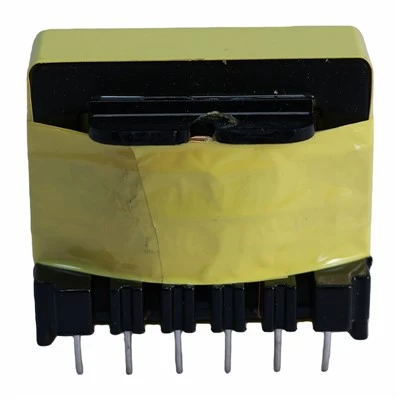
1. Electrical Parameters
Let’s start with the electrical parameters, which are often at the top of the list for customization.
Voltage Ratings
One of the most common customization requests is adjusting the voltage ratings. Different applications demand different input and output voltages. For example, in some power supply units for small electronic devices, you might need a low output voltage, say 5V or 12V. On the other hand, industrial applications could require much higher voltages, sometimes up to several hundred volts.
We can customize the number of turns in the primary and secondary windings to achieve the desired voltage transformation ratio. If you need to step up the voltage, we’ll increase the number of turns in the secondary winding compared to the primary. Conversely, for stepping down the voltage, the opposite is done.
Current Capacity
Current capacity is another crucial electrical parameter. Some high – power applications, like large – scale inverters or welding machines, need high – current transformers. We can customize the wire gauge used in the windings to handle the required current. Thicker wires have lower resistance and can carry more current without overheating. For instance, if a customer needs a transformer for a high – current application, we might use a larger diameter copper wire to ensure the transformer can handle the load safely.
Frequency Range
As the name suggests, high frequency transformers are designed to operate at high frequencies. However, the specific frequency range can vary depending on the application. Some applications, such as radio frequency (RF) circuits, operate at very high frequencies, sometimes in the megahertz or even gigahertz range. Others, like some switch – mode power supplies, may operate at a few tens or hundreds of kilohertz.
We can use different core materials and winding techniques to optimize the transformer’s performance within the desired frequency range. For high – frequency applications, we often use ferrite cores because they have low core losses at high frequencies.
2. Physical Dimensions
The physical size and shape of the transformer can also be a major customization factor.
Size Constraints
In many modern electronic devices, space is at a premium. For example, in laptops, tablets, and smartphones, the power supply components need to be as small as possible. So, customers may request us to design a high frequency transformer that fits within a specific volume.
We can optimize the design of the transformer, such as using more compact core shapes or reducing the insulation thickness (while still maintaining safety standards) to meet the size requirements. Sometimes, we might also use planar transformers, which are flatter and more suitable for applications with limited height.
Shape
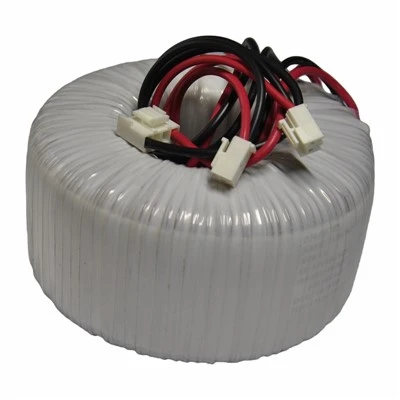
The shape of the transformer can also be customized. In some cases, the transformer needs to fit into an irregularly shaped enclosure. We can design transformers with non – standard shapes to meet these unique requirements. For example, if a customer has a circular enclosure, we can design a circular – shaped high frequency transformer.
3. Temperature and Environmental Requirements
Transformers generate heat during operation, and the ability to handle heat and operate in different environmental conditions is an important consideration.
Temperature Rise
Customers may specify a maximum allowable temperature rise for the transformer. This is especially important in applications where the transformer will be operating in a confined space or in a high – temperature environment. We can use better – heat – dissipating materials, such as high – thermal – conductivity potting compounds, and design the transformer with proper ventilation channels to keep the temperature rise within the specified limit.
Environmental Conditions
The transformer may need to operate in various environmental conditions, such as high humidity, extreme temperatures, or dusty environments. For applications in high – humidity areas, we can apply special coatings to the transformer to prevent corrosion. In extreme – temperature environments, we can select core and winding materials that can withstand the temperature extremes without significant degradation in performance.
4. Safety and Regulatory Requirements
Safety is always a top priority, and different applications have different safety and regulatory requirements.
Insulation and Isolation
Customers often require a certain level of insulation and isolation between the primary and secondary windings. This is to prevent electrical shock and ensure the safety of the users and the equipment. We can use high – quality insulation materials and design the transformer with appropriate insulation distances to meet these requirements.
Regulatory Compliance
Depending on the application and the geographical location, the transformer may need to comply with various regulatory standards, such as UL (Underwriters Laboratories), CE (Conformité Européene), or IEC (International Electrotechnical Commission) standards. We have the expertise to design and manufacture transformers that meet these regulatory requirements.
5. Cost Considerations
While performance and quality are important, cost is also a significant factor for many customers.
Material Selection
We can work with customers to select the most cost – effective materials without sacrificing too much on performance. For example, if the application doesn’t require the highest – grade ferrite core, we can use a more affordable alternative that still meets the basic requirements.
Manufacturing Process
We can also optimize the manufacturing process to reduce costs. For instance, by using automated winding machines, we can increase production efficiency and reduce labor costs.
In conclusion, if you’re in the market for a high frequency transformer and have specific customization requirements, don’t hesitate to reach out. We have the experience and expertise to design and manufacture transformers that meet your exact needs. Whether it’s adjusting the electrical parameters, fitting into a specific space, or meeting safety regulations, we’ve got you covered. So, if you’re interested in discussing your high frequency transformer needs, just drop us a line, and let’s start a conversation about how we can work together to get you the perfect transformer for your application.
Low-voltage Transformer References:
- "Transformer Design Handbook" by Colonel Wm. T. McLyman
- "High – Frequency Switching Power Supplies: Theory and Design" by Ned Mohan
Dongguan Hensiron Electric Co., Ltd.
As one of the most professional high frequency transformer suppliers in China, we have world-leading production equipment and strong manufacturing capabilities. Please feel free to buy high quality high frequency transformer made in China here from our factory. Customized orders are welcome.
Address: Building 4, Xinxing Industrial Zone, Wangao Road, Wanjiang Street, Dongguan City, China
E-mail: jessica@dghensiron.com
WebSite: https://www.dghensiron.com/
