Hey there! I’m a supplier of HAST Test Chambers, and I’ve seen firsthand how different factors can mess with the performance of these machines. One of those sneaky factors that often gets overlooked is dust. In this blog, I’m gonna break down what kind of impact dust can have on a HAST Test Chamber. HAST Test Chamber
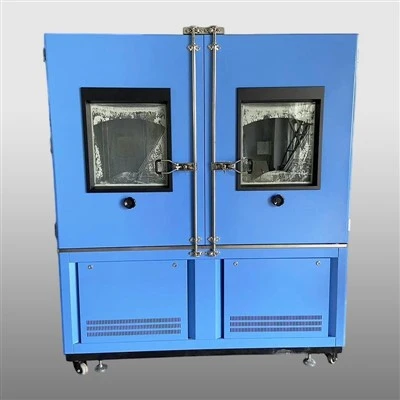
First off, let’s talk about what a HAST Test Chamber is for those who might not know. A Highly Accelerated Stress Test (HAST) Chamber is used to simulate harsh environmental conditions like high temperature, high humidity, and pressure to test the reliability and durability of electronic components and materials. It’s a crucial tool in industries such as electronics, automotive, and aerospace, where the failure of a part can have serious consequences.
Now, let’s dive into how dust can affect these chambers.
Air Circulation and Temperature Distribution
The air inside a HAST Test Chamber needs to circulate properly for accurate temperature and humidity control. Air circulation systems use fans to move air around the chamber. Dust can accumulate on the fan blades over time. When that happens, the balance of the fan can be disrupted. A fan with unevenly distributed dust on its blades will vibrate more, and it won’t move air as efficiently as it should.
Unefficient air circulation messes up the temperature distribution inside the chamber. You see, these chambers are supposed to have a uniform temperature throughout to ensure reliable test results. But with dust – clogged fans, some areas might be hotter or cooler than others. This means that the components being tested might not be exposed to the intended conditions, leading to inaccurate test results. For example, if a component is supposed to be tested at a specific high – temperature range but is actually in a cooler spot due to poor air circulation, the test won’t accurately represent how it would perform in real – world high – temperature situations.
Humidity Control
Humidity control is another critical aspect of a HAST Test Chamber. These chambers use humidifiers and dehumidifiers to maintain the right level of moisture in the air. Dust can cause problems in both of these systems.
In a humidifier, dust can clog the water nozzles or the evaporation surfaces. If the nozzles get blocked, the water can’t be dispersed into the air as fine droplets, which is necessary for proper humidity increase. This can lead to the chamber not being able to reach or maintain the desired humidity level. On the other hand, in a dehumidifier, dust can accumulate on the cooling coils. The cooling coils are responsible for condensing the water vapor in the air. When dust covers these coils, their ability to cool the air and condense water is reduced. As a result, the chamber might have higher humidity levels than intended, again affecting the accuracy of the tests.
Sensor Accuracy
HAST Test Chambers rely on a variety of sensors to monitor temperature, humidity, pressure, and other parameters. These sensors need to be clean to work accurately. Dust can coat the sensors, creating a barrier between the sensor and the environment it’s supposed to measure.
For instance, a temperature sensor covered in dust might not be able to accurately detect the actual temperature of the air inside the chamber. It could give a reading that’s either higher or lower than the real temperature. Similarly, a humidity sensor with dust on it might not accurately measure the moisture content in the air. This inaccurate data can lead to incorrect adjustments in the chamber’s control systems. If the control system thinks the temperature is lower than it actually is because of a dusty sensor, it might keep heating the chamber, causing the components inside to be exposed to higher temperatures than planned.
Component Wear and Tear
Dust is abrasive. When it gets inside the moving parts of a HAST Test Chamber, like the door hinges, the sliding mechanisms, or the motor bearings, it can cause increased wear and tear. The dust particles can act like tiny sandpaper, scraping away at the surfaces of these components.
Over time, this wear can lead to mechanical failures. For example, a worn – out bearing in a fan motor can cause the motor to overheat and eventually burn out. A damaged door hinge can lead to a poor seal on the chamber door, allowing air and moisture to escape, which can completely disrupt the test conditions. And let’s not forget about the cost of replacing these damaged components. It can add up quickly, not to mention the downtime of the chamber while repairs are being made.
Contamination of Test Samples
One of the worst things dust can do is contaminate the test samples themselves. If dust particles are floating around inside the chamber, they can land on the electronic components being tested. This contamination can affect the performance of the components in ways that have nothing to do with the actual stress being applied in the test.
For example, if a dust particle lands on a circuit board, it could cause a short – circuit or interfere with the electrical signals. This might make the component seem like it’s failing the test when in reality, it’s just been contaminated by dust. This false failure can lead to wasted time and resources in further testing and possible design changes.
So, what can you do to prevent these dust – related problems? Regular cleaning and maintenance are key. You should clean the interior of the chamber, the air circulation system, the sensors, and other components on a regular basis. Also, make sure the environment where the chamber is located is as dust – free as possible. You might even consider using air filters in the room to reduce the amount of dust that can enter the chamber.

Now, if you’re in the market for a HAST Test Chamber, whether you’re worried about dust issues or just looking for a high – quality machine, we’re here to help. Our chambers are designed with features that can minimize the impact of dust, such as easy – to – clean components and efficient air filtration systems. If you want to learn more about our products or have any questions about how to keep your chamber running in top condition, don’t hesitate to reach out. We’re always happy to have a chat about how we can meet your testing needs.
References
- "Highly Accelerated Stress Testing: With New Information on HASS" by Robert B. Grady
- "Environmental Test Chambers: Design and Operation" by A. J. McLean
Stability Chamber So, get in touch and let’s start a conversation about your HAST testing requirements!
ALP Technology (T&M) Ltd.
With abundant experience, we are one of the most reliable hast test chamber manufacturers and suppliers in China. Please feel free to buy advanced hast test chamber for sale here from our factory. All customized products are with high quality and competitive price.
Address: No.19, Mingde Road, Xi’an, China
E-mail: info@alp-environment.com
WebSite: https://www.alp-environment.com/
