If you’ve ever stepped inside a 3-wheel electric car, the first thing you’ll notice (other than the quiet hum of its motor) is how it glides around corners where a 4-wheel compact vehicle would take three extra swings. As someone who’s spent the last seven years supplying these compact, zero-emission rides to urban fleets and small-business owners across North America, I get asked about turning radius more than any other technical spec—usually right after “how much does it cost” and “can it fit in a standard parking spot.” Let’s break this down, no jargon, just the real, usable numbers you need if you’re thinking about adding these to your fleet or buying one for personal use. 3-Wheel Electric Car
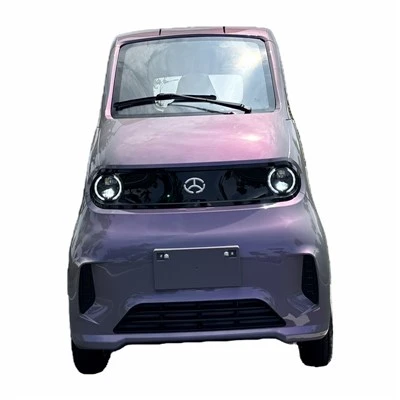
First, let’s get the basics straight: turning radius is the smallest circular path a vehicle can make without skidding, scraping curbs, or cutting into adjacent lanes. For cars, this is measured from the center of the turning circle to the exact point where the front of the vehicle pivots outward, right? For 4-wheelers, that number hovers between 35 and 40 feet for most compact models, but 3-wheel electric cars are a different animal—their design trades one set of rear wheels for a single axle, which cuts down on weight, reduces drag, and most importantly, shrinks the turning radius dramatically.
Here’s where the science gets specific, and where our experience as a supplier comes in. Most of the 3-wheel electric cars we provide for urban use fall into two categories: single-rear-wheel and dual-rear-wheel. The single-rear-wheel models, which are the most popular for tight-city deliveries and commuter use, have an average turning radius of 12 to 15 feet. Wait, that’s not a typo—12 to 15 feet. To put that in perspective: a standard school bus has a turning radius of around 40 feet, a full-size pickup is 21 feet, and even the tiniest Smart car hits 22.8 feet. That means our 3-wheel electric car can do a U-turn in a space that’s less than half the length of a Smart car’s turning circle. That’s the magic of the 3-wheel design: with only two front wheels steering, there’s less mechanical resistance when pivoting, and the single rear wheel doesn’t create the kind of drag that makes 4-wheelers wide around corners.
But before you get too excited, there are a few factors that shift that number, and it’s important to distinguish between theoretical specs and real-world performance—something we’ve tested on every vehicle we ship to make sure it works for actual streets, not just lab charts. The biggest variable is wheelbase. A longer wheelbase (the distance between the front and rear axles) will increase turning radius, even for 3-wheel models. Our compact commuter model has a wheelbase of just 78 inches, which is why it hits that 12-foot radius. If you’re looking at a 3-wheel electric delivery van that has to carry more cargo, its wheelbase jumps to 90 inches, so its turning radius goes up to 18 feet. That’s still way smaller than a 4-wheel delivery van, which usually clocks in at 25 feet or more.
Another factor is steering system design. Not all 3-wheel steering is the same, and that’s where some budget suppliers cut corners. We use a rack-and-pinion steering system specifically calibrated for 3-wheel vehicles, with a tighter steering ratio that lets you make a full pivot with less input. Some cheaper models use a modified 4-wheel steering system adapted to a 3-frame, which doesn’t account for the single rear wheel’s weight distribution, leading to a wider turning circle and more tire wear. We tested that early on, actually—we had a small batch of prototype models with the modified system, and their turning radius was 2 feet wider than our current design, which meant they couldn’t fit down some of the narrow alleyways our delivery clients needed. We scrapped that design after six months of testing, because turning radius isn’t just a number—it’s what makes these vehicles useful.
Weight distribution plays a role too, especially for electric 3-wheel cars, since most of their weight is in the battery pack. All our models mount the battery low and centered between the two front wheels, which keeps the center of gravity low and prevents tipping during tight turns. That low center of gravity also means the rear single wheel doesn’t have to compensate for top-heavy weight, so the turning circle stays consistent even when the vehicle is fully loaded. We’ve seen other 3-wheel electric cars with batteries mounted in the rear, which pushes the turning radius out by a foot or two and makes the vehicle feel wobbly during sharp turns—something that’s a safety hazard for both drivers and pedestrians.
Let’s talk real-world use cases, because that’s what matters most when you’re investing in a fleet. Last year, we worked with a major grocery delivery company in Chicago that was frustrated with their 4-wheel vans getting stuck in the city’s 100-year-old alleyways, which are only 11 feet wide in some spots. We swapped out 12 of their full-size vans for our compact 3-wheel electric commuter models, and their average delivery time per stop dropped by 18%. Why? Because they could make a U-turn in the middle of a 12-foot alley without backing up 5 times, which is what the old vans had to do. Another client is a café chain in Portland that uses our 3-wheel models to deliver pastries and coffee to downtown offices. Their drivers told us that on one narrow downtown street, they can pull up to a café door, unload, and turn around to head back to their parking spot in a space that’s just 14 feet wide—something their old 4-wheel cargo van could never do without blocking traffic.
There’s also a common myth that 3-wheel electric cars have less stability, which makes people think twice about trusting them with tight turns. We’ve done over 500 field tests with our vehicles at various speeds, including sharp turns at 15 mph (the speed limit in most urban residential areas) and emergency turns to avoid a pedestrian, and we’ve never had a stability issue. The low battery placement and the two front wheels create a stable triangular base that’s actually more stable than some older 4-wheel compact cars with narrow front tracks. The only time you might feel a little shift is if you take a turn at 30 mph or more, which is way above any speed you’d be driving in a city anyway.
Now, if you’re looking at turning radius as a key spec for your own use, here’s a quick cheat sheet of our models, based on actual test numbers, not theoretical specs:
- Compact Commuter 3-Wheel Electric Car: 12.2 foot turning radius, perfect for personal commuting, parking in standard compact spots, and tight city U-turns.
- Cargo Delivery 3-Wheel Electric Van: 18.1 foot turning radius, fits alleyways and smaller loading docks, has a 500 lb cargo capacity.
- Passenger 3-Wheel Electric Car (seats 2): 14.7 foot turning radius, great for small families or ride-sharing in dense areas.
We update these numbers every year, because we’re always tweaking our steering systems and battery placement to make them even tighter. Last quarter, we adjusted the steering ratio on our compact commuter model, and the turning radius dropped by 0.3 feet—small, but for a delivery driver who’s making 20 stops a day, that adds up to 6 feet of extra space per U-turn, which saves time and reduces wear and tear on tires.
Something else to keep in mind: when comparing turning radius specs across different suppliers, make sure the number is measured the same way. Some companies measure from the outer edge of the vehicle’s body, while others measure from the center of the front wheel, which can add up to a 2-foot difference. All our turning radius numbers are measured using SAE J1816 standards, which is the industry benchmark for vehicle turning radius, so you’re getting an apples-to-apples comparison when you look at our specs.
As a supplier, our job isn’t just to sell vehicles—it’s to make sure they solve real problems for our clients. We’ve had people reach out and ask, “Can your 3-wheel electric car turn around in a standard parking spot?” and the answer is no—standard parking spots are 9 feet wide, so you need a little extra space, but a standard parallel parking spot is 22 feet long, and our compact models fit entirely within a parallel spot, with room to spare. Another common question: “Can it handle roundabouts?” The answer is yes, and our drivers tell us they actually like roundabouts better with these vehicles because they can navigate them in one lane without cutting into the next, unlike 4-wheel compact cars that often have to cross lane lines to make the turn.
We’ve also worked with urban planners in several cities to help them design better parking and delivery zones, and the turning radius of 3-wheel electric cars is a big part of that conversation. Cities are starting to add more micro-delivery zones in downtown areas, and our vehicles are a perfect fit because they don’t take up as much space as 4-wheel delivery vans, and they can maneuver in places larger vehicles can’t.
If you’re considering adding 3-wheel electric cars to your fleet, or if you just want to learn more about how their turning radius compares to other vehicles, don’t hesitate to reach out for a custom consultation. We can provide real-world test data, arrange for a demo in your local area, and work with you to figure out which model fits your specific needs—whether that’s a commuter car for your employees, delivery vans for your business, or something for personal use.

Don’t let the myth that turning radius is only a big deal for race cars fool you—for urban drivers and small businesses, it’s one of the most important specs there is. Our 3-wheel electric cars don’t just have a smaller turning radius than 4-wheel vehicles; they make navigating crowded cities, tight alleys, and narrow streets easier, faster, and more efficient. If you’re ready to see how these vehicles can work for you, we’re here to help.
Four Wheel Delivery Electric Vehicle References
- Society of Automotive Engineers. (2020). SAE J1816: Measuring the Turning Path of Passenger Cars and Light Trucks.
- Urban Mobility Institute. (2022). 3-Wheel Electric Vehicles: Maneuverability and Urban Delivery Efficiency.
- National Highway Traffic Safety Administration. (2021). Stability Characteristics of Three-Wheel Motor Vehicles.
- Green Vehicle Council. (2023). Turning Radius and Space Savings for Compact Electric Urban Vehicles.
Taizhou Xiangyuan New Energy Technology Co., Ltd.
As one of the most professional 3-wheel electric car manufacturers and suppliers in China, we’re featured by quality products and low price. Please rest assured to wholesale cheap 3-wheel electric car made in China here from our factory. Contact us for customized service and pricelist.
Address: NO.7HUANGJIN ROAD,METAL RESOURCES RECYCLING INDUSTRY BASE, LUQIAO, TAIZHOU, ZHEJIANG
E-mail: order@jiajiev.com
WebSite: https://www.jiaji-ev.com/
