If you’re here, odds are you’re staring down a project that demands consistent, precise metal parts—whether you’re doing roof panels for a new warehouse, framing studs for residential construction, or custom trim for automotive or appliance work. And you know that the roll forming machine you pick isn’t just another piece of equipment; it’s the backbone that will make or break your part quality, your production speed, and your bottom line. I’ve been selling roll forming machines for over 12 years, and I can’t tell you how many times I’ve talked to guys who bought the first machine they found online, only to realize six months later it can’t handle their material, slows to a crawl on long runs, or breaks down every other week. Let me break this down like I do when I’m on a call with a new customer—no fancy jargon, just real stuff that actually matters for your business. Roll Forming Machine
First off, forget the one-size-fits-all myth. I see this all the time: someone says “I need a roll forming machine” and starts shopping without answering the most basic, non-negotiable questions first. Let’s start with the material you’re working with. Roll forming works with everything from thin-gauge aluminum for gutters to thick, high-tensile steel for structural beams. If your machine is rated for 16-gauge steel and you try to run 10-gauge, you’re going to bend the rolls, jam the line, and possibly burn out the motor before the end of the first run. Conversely, if you get a machine built for heavy steel and you’re only rolling 24-gauge aluminum, you’re wasting money on overkill you’ll never use—plus that big machine will run slower, use way more power, and take up twice the floor space you actually need. Don’t skip this step: jot down your exact material type, its thickness range, and any special coatings (like galvanized steel, stainless steel, or pre-painted metal). And be honest about it—don’t fudge a half-gauge because you think it won’t matter. I’ve had guys try that, and it always ends badly for both of us.
Next up, the profile you’re making. This is the second biggest make-or-break point, and it’s way more complicated than just “it’s a roof panel.” Let’s get specific: how many bends does your part have? What’s the minimum inside bend radius? How sharp or smooth do those corners need to be? And—this is the part most people miss—what’s the length of your parts, and how consistent does the cut have to be? If you’re making 10-foot gutter sections, a machine with a simple flying cut-off will work great. But if you’re making custom metal trim that’s cut to lengths within a tenth of an inch, you need a shear or cut-off system calibrated for precision, not speed. Also, pay attention to how the rolls are designed. Some machines use generic rolls that work for 5 or 10 different profiles, but they sacrifice accuracy for that versatility. If you’re making one main profile 80% of the time, custom-machined rolls are going to give you way better quality and longer lifespan than a set of generic rolls. If you’re switching profiles every few days, though, a machine with quick-change roll holders might be worth the extra cost—just make sure those quick-change systems actually work, not just a gimmick that takes 20 minutes per profile swap.
Once you’ve got material and profile locked in, it’s time to think about the line’s configuration. Roll forming isn’t just the machine itself—it’s the whole chain from uncoiler to coiler or cut-to-length table. A lot of new customers only look at the roll forming section and forget about the upstream and downstream gear, and that’s a huge mistake. If you’re using raw coils, your uncoiler has to match the weight and width of your coils. A 10,000-pound steel coil needs a motorized uncoiler, not a manual one that you crank by hand—you’ll never get the feed consistent, and you risk damaging the coil. On the other end, if you’re running long parts, you need a run-out table that can hold multiple parts without them getting bent or scratched. Also, consider automation: do you need a pre-punch system for holes, notches, or embosses? If you’re running thousands of parts a day, a computerized control system (think PLC with a touchscreen) will save you so much time vs. old analog dials. You won’t have to manually adjust roll gaps every time you switch a profile, and you’ll get real-time data on speed, tonnage, and any faults that pop up. That said, don’t buy a machine with a $10,000 touchscreen if you’ll only use 10% of its features. Simple is often better, as long as it has the controls you actually need to run your parts.
Now, let’s talk about build quality—this is where a lot of people get burned by cheap overseas machines. I’m not saying all imported machines are bad, but I’ve seen way too many that are made with thin, flimsy frame steel, rolls that are poorly machined so they wear out in a year, and motors that underpower after a few months. When you’re looking at machines, lift a section of the frame (or ask to see photos of the frame cross-section). If it’s made of 6-inch thick steel I-beams vs. 3-inch channel iron, that’s a big difference in rigidity. Rigidity is key—if the frame flexes while the rolls are forming metal, you’ll get wavy parts, inconsistent bends, and shortened roll life. Also, ask about the roll material and finish. High-quality rolls are usually made of tool steel, then hardened and chrome-plated to resist wear and corrosion. Cheaper rolls might be plain steel that only gets a light polish, so after a few thousand parts, they start to scuff the metal, ruining your finish. And don’t sleep on the motor and gearbox: a 10-horsepower motor from a reputable brand will hold up for decades, while a cheap Chinese motor might die in two years. I always tell customers: the cheapest machine upfront is rarely the cheapest in the long run, because you’ll spend more on repairs, downtime, and replacing it earlier than a solid build will last.
Service and support—this is the part that makes local suppliers worth their weight, and the part that online-only suppliers can’t compete on. I’ve had customers call me at 8 a.m. on a Monday panicking because their machine broke down mid-run, and I can usually have a technician on-site or ship a replacement part by the end of the day. If you buy a machine from a supplier that’s 10,000 miles away, you’re stuck waiting weeks for a part, or paying exorbitant shipping and customs fees. Also, ask about training: can they send someone to your facility to train your operators, or do you get a 10-minute video that doesn’t cover how to adjust roll gaps for a new material thickness? Another thing: spare parts availability. Any machine will need a replacement shear blade, a belt, or a sensor at some point. If your supplier doesn’t stock common parts locally, you’re going to be out of production for way longer than you want to be. I never push my service on customers, but I tell them straight up: if something goes wrong, you don’t want to be left hanging.
Wait, let’s circle back to something I almost forgot: production volume. Are you a small business making a few hundred parts a week, or a large manufacturer running 24/7 shifts? If you’re a small shop, a semi-automatic machine might be all you need—lower upfront cost, easier to operate, fits your production scale. But if you’re running 80 hours a week, you need a machine built for continuous duty cycles, with heavy-duty components, and automation to keep up with demand. A small, entry-level machine might not handle 10-hour runs without overheating the motor or wearing out prematurely. Also, lead time: if you need a machine in 2 weeks for a big order, don’t get talked into a custom machine that takes 12 weeks. There are plenty of good, standardized machines that will fit your needs without the long wait.
I also want to mention a few red flags to watch out for. If a supplier won’t let you see a test run of your specific profile, run the other way. How do you know the machine works for your parts unless you see it in action with your material? If they only offer generic profiles and can’t tell you how they modified the machine for special requirements, that’s another warning sign. And if the price seems way too good to be true—like, half of what reputable suppliers charge—there’s a reason. It’s probably missing parts, made of cheap materials, and won’t last. I’ve seen guys save $10k upfront only to spend $20k on repairs in the first year.
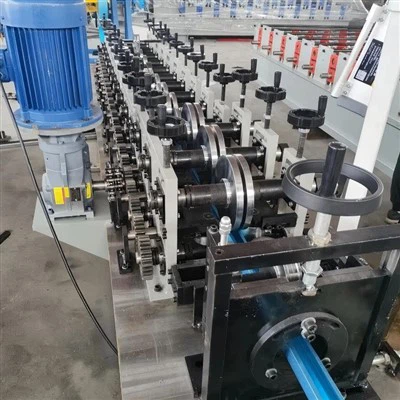
Let me give you a quick example to put this all together. A few months ago, a customer of mine came to me after buying a used roll forming machine from an auction site. He was making 24-gauge aluminum gutters, but the machine was built for 12-gauge steel. It flexed so bad during runs that his gutters had wavy edges, and the rolls were scuffing the pre-painted coating so he had to scrap 15% of every run. He ended up buying a mid-sized, rigid frame machine with aluminum rolls rated for 24-gauge, and quick-change rolls for his two most common gutter profiles. His scrap rate dropped to less than 1%, and he’s been running the same machine 6 months without a single breakdown. That’s the difference between thinking about price and thinking about what your actual needs are.
Steel Pipe Testing Equipment At the end of the day, choosing a roll forming machine is an investment in your business. It’s not just a piece of equipment—it’s what will let you take on bigger jobs, improve your part quality, and make your operations more efficient. If you’re still unsure what you need, or you want to walk through your exact material, profile, and volume with someone who actually knows this stuff, I’m here to help. No sales pitch, no pressure, just real advice to make sure you get a machine that works for you, not against you. If you want to chat, you can reach out anytime to talk through your project.
References
- Roll Forming Technology and Applications, Society of Manufacturing Engineers, 2019
- “Key Considerations for Selecting Roll Forming Equipment,” MetalForming Magazine, August 2022
- Roll Forming Machine Operation and Maintenance Guidelines, American Iron and Steel Institute, 2021
Tianjin Binhai Yashanway Import and Export Co., Ltd.
Tianjin Binhai Yashanway Import and Export Co., Ltd. is one of the most reliable roll forming machine manufacturers and suppliers in China, also supports customized service with low price. Welcome to wholesale bulk roll forming machine made in China here from our factory. Contact us for quotation.
Address: B-508, Xiangnian Plaza, Dongjiang Road, Hexi District, Tianjin, China
E-mail: crystal@yashanway.com
WebSite: https://www.yashanway.com/
