Hey there, farm folks, small landowners, and anyone who’s got a medium tractor that’s been acting like a diva lately – I’m [My Name], part of the team at that medium tractor supplier you’ve probably seen around the ag circles, and I’ve spent enough late nights fixing these bad boys in fields, driveways, and even a few muddy barns to know troubleshooting a medium tractor doesn’t have to feel like solving a rocket science problem. Most folks panic when their tractor sputters or won’t turn over, but 9 times out of 10, the issue’s something simple you can knock out yourself before calling a mechanic (and saving yourself that pricey service call). Medium Tractor

First off, let’s make sure we’re on the same page: a medium tractor is that workhorse – usually 40 to 100 HP, right? It’s your go-to for tilling, hauling hay bales, mowing 10+ acres, or pulling a small loader – not the tiny 20 HP lawn tractor for your suburban yard, not the 150 HP monster for big commercial operations. That size means it’s built for consistent, medium-duty work, so its quirks are predictable once you know where to look. I’ve seen tractors that sat unused for 6 months start acting up, ones that ran fine last week but died mid-till, even ones that just won’t engage the PTO when you need it most.
Let’s start with the most common headache: won’t start. I get texts every week from customers saying their 65 HP John Deere (or Kubota, Case, whatever brand you bought from us) won’t crank. First, skip the urge to crank it 10 times straight – that just drains the battery faster. First check: battery terminals. Yeah, I know, it sounds basic, but after a season of dusty field work and washing off mud, those terminals get caked with grime or loose. Pop the hood, grab a wrench, wiggle the cables – if they move more than a hair, tighten them. If they’re crusty with white or green corrosion, grab a wire brush and a little baking soda paste (mix 1 part baking soda with 3 parts water, dab it on, scrub, rinse, and dry) – that stuff kills corrosion way better than any of the fancy $10 terminal cleaners.
Next, fuel issues. 7 out of 10 start problems I see are fuel-related, especially if the tractor’s been sitting. Old fuel (anything older than 30 days for gas, 60 days for diesel) turns gummy and clogs the fuel filter or lines. If you’ve got a diesel tractor, make sure you didn’t mix up winter fuel and summer fuel – if it’s cold out and you used summer diesel, that paraffin wax clogs the filter. For a quick test: loosen the fuel line at the carburetor (or fuel injector pump if it’s diesel) – if fuel doesn’t sputter out within 2 seconds, you’ve got a blockage. That means you probably need to replace the fuel filter – it’s a $10 part, takes 5 minutes to swap, and I can’t tell you how many customers have skipped this and ended up stranded. Also, check the fuel shut-off valve – it’s easy to bump it by accident when you’re moving implements, so make sure it’s in the “on” position.
Another start-killer: air filters. If the air filter’s clogged with dust, pollen, or crop residue, the engine can’t get enough air to combust fuel. For medium tractors, you should check the air filter every 50 hours of use, or twice a season if it’s been sitting. Pull it out – if it’s dirty, tap it gently on a hard surface (don’t blow it with compressed air too hard, that can tear the filter) or replace it. A dirty air filter doesn’t just cause starting issues – it kills fuel efficiency, so it’s a win-win to keep it clean.
Now, what if it starts but runs rough, or sputters when you give it gas? Let’s move beyond start issues here. First, check the spark plug if it’s a gas tractor. Pull the spark plug, look at it – if it’s black and gunked up, or the gap’s too big, replace it. For diesel tractors, it’s a glow plug issue if it’s cold out – glow plugs warm the combustion chamber, and if one’s bad, the engine’ll sputter or smoke white until it warms up. To test a glow plug, use a multimeter – if it doesn’t show continuity, swap it. I’ve had customers tell me their tractor ran fine in October but wouldn’t start in March just because one glow plug went bad – super easy fix.
Next, let’s talk about performance issues: it’s running slow, can’t pull the hay bale, or the PTO won’t engage. First, check tire pressure. Medium tractors run on specific PSI – usually 10 to 15 PSI for rear tires, less for front. If your rear tires are underinflated, you’re wasting horsepower just spinning tires instead of pulling. Grab a tire gauge – don’t just guess, because even a 2 PSI drop can cut your traction by 20% in mud or grass. If the tires are overinflated, that’s bad too – they’ll bounce instead of grip, especially on uneven ground.
Then, PTO issues – super common because people misuse them, not because the tractor’s broken. If your PTO won’t engage, first check the engagement lever – make sure it’s fully pushed into the “engage” position, and that you’re not on the brake (most medium tractors have a safety switch that won’t let PTO engage if the brake is pressed). If that’s not it, check the PTO clutch – some tractors have a hydraulic PTO clutch, so make sure the hydraulic fluid level is full. Low hydraulic fluid is a huge culprit here – if the reservoir’s below the “full” line, the clutch won’t engage. Also, make sure the implement you’re hooking up isn’t over the PTO’s rated capacity – a medium tractor’s PTO is usually 540 RPM, so don’t hook up a heavy tiller meant for a big 120 HP tractor, that’ll strain it and make it seem like it’s not working.
Now, hydraulic issues – if your loader won’t lift, or the three-point hitch won’t move. Again, hydraulic fluid level is first. Pop the hood, find the hydraulic reservoir (it’s separate from the engine oil reservoir, usually labeled “HYD”), check the dipstick – if it’s low, add the right type of hydraulic fluid (check your manual, don’t just use any fluid). Also, check for hydraulic leaks – look under the tractor for wet spots on hoses or connections. A small leak might just be a loose hose clamp, but a big leak means you need to fix it before the fluid runs out, because then the hydraulics won’t work at all. I’ve seen customers run their tractor with low hydraulics just to get a job done, and that burns out the hydraulic pump, which is a $500+ repair – way more expensive than topping off fluid.
Let’s not forget engine oil issues. This is the big one for long-term health – if your oil’s low, the engine’ll seize up, which is a total nightmare, but even low oil causes rough running. Check the oil level with the dipstick when the tractor’s off and on level ground – if it’s below the “add” line, add the right oil (usually 10W-30 for most medium tractors, but again, check the manual). Also, if the oil’s dark and gritty instead of amber, it’s time for an oil change – don’t wait until the end of the season, change it every 100 hours of use.
Wait, what about electrical issues? If the dashboard lights won’t come on, or the lights go out when you’re mowing at dusk. First, check the fuses – they’re usually in a fuse box under the dash or hood, labeled. If a fuse is blown, replace it with the same amp rating (don’t use a higher amp fuse, that can cause a fire). Also, check the wiring connections – especially if you’ve been working around water or mud, wires can get corroded, so wiggle the wires near the lights and dash to see if they spark or flicker – that means a loose connection.
Now, let’s talk about when to actually call a mechanic. I’m all for fixing stuff yourself, but there are a few red flags. If you hear a knocking sound from the engine – that’s usually a bad rod bearing, which is a major repair, so don’t mess with that. If the radiator is overheating and you’ve checked the coolant level and the thermostat – that could be a blown head gasket, which is something best left to a pro. If your transmission is slipping, like it shifts hard or jumps out of gear – don’t keep driving it, that’ll ruin the transmission, so call a mechanic before it’s a $2000 repair.
Here’s a tip from our service team: keep a basic troubleshooting kit in your tractor at all times. We recommend a wrench set, a screwdriver set, a wire brush, extra fuses, a few fuel filters, a bottle of the right hydraulic fluid, and your tractor’s manual (we leave a copy with every tractor we sell, and you can download a digital one on our site if you lose it). Most of the time, when you’re out in the field at 7 AM, the fix is in that kit, not a tow truck.
Wait, I should mention something about winter storage, too – because a lot of issues come from tractors sitting unused. If you’re putting your medium tractor up for winter, drain the old fuel, add a fuel stabilizer, change the oil and filter, charge the battery and disconnect it, and cover the tractor to keep dust and moisture out. I’ve had customers bring in tractors that sat all winter with old fuel, and the carburetor was completely gummed up – that’s a $150 carburetor cleaning, which totally could’ve been avoided with a $5 fuel stabilizer and draining the fuel.
Another thing: don’t ignore small issues. If your tractor’s running a little rougher than usual, or it’s using a little more fuel, don’t brush it off – that’s your tractor telling you something’s up. I’ve had customers wait a month to fix a minor fuel filter clog, and it turned into a damaged fuel injector, which cost way more. Catching issues early saves you time and money.
At the end of the day, medium tractors are tough, but they need regular checkups, just like your pickup truck. The key is to start with the simplest checks first – battery, fuel, air filters, fluid levels – before moving to more complex stuff. Most folks can handle these basic troubleshooting steps without a mechanic, which is why we put so much focus on teaching our customers these tricks when we deliver their tractor.
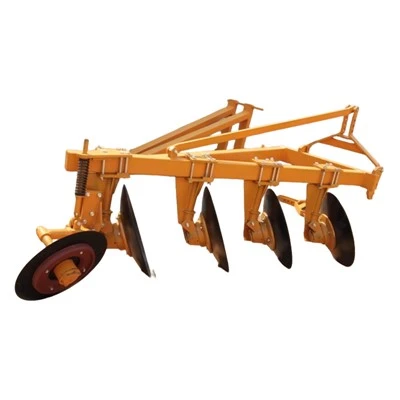
Tillage Equipment If you’re still having trouble after going through these steps, or you need a replacement part, or you’re in the market for a new medium tractor, we’re here to help. Our team knows medium tractors inside and out, and we can walk you through every step of troubleshooting, help you order parts, or work out a deal for a new tractor that fits your needs. Don’t stress about your tractor acting up – give us a shout to connect and chat through how we can get you back to work.
References
- American Society of Agricultural and Biological Engineers. "Maintenance Guidelines for Medium Tractors." 2022.
- Tractor Supply Co. "2023 Medium Tractor Troubleshooting Handbook."
- Kubota Manufacturing. "Common Medium Tractor Issue Diagnostic Steps." 2021.
- Case IH Agriculture. "Hydraulic System Care for Medium Duty Tractors." 2020.
Sevol International Trade (Shandong) Co., Ltd.
As one of the most professional medium tractor manufacturers and suppliers in China, we’re featured by quality products and good price. Please rest assured to buy advanced medium tractor for sale here from our factory. We also accept customized orders.
Address: 1210, Building 13, No. 13129, Yingqian Street, Liyuan Street, Kuiwen District, Weifang City, Shandong Province
E-mail: Savotrak@163.com
WebSite: https://www.sevol-global.com/
