If you’ve ever found yourself standing in a garage, workshop, or fleet maintenance bay staring at a dead lead acid battery, you know how frustrating it can be—especially when you don’t know where to turn for a reliable charger that will actually keep that battery in good shape, not just top it off. As someone who’s spent the last 12 years working directly with lead acid batteries (first troubleshooting them in automotive repair shops, then switching to making the chargers that power them), I get how overwhelming it can feel to search for a charger that’s not just cheap, but safe, durable, and actually compatible with your battery. I’ve talked to dozens of people who’ve bought a “$20 off Amazon charger” that fried their battery in a week, or a unit that took three days to charge a standard deep-cycle battery, and that’s why I want to break down exactly where you can buy a lead acid battery charger that works—including why going direct from a supplier like ours might be the smartest call you’ll make for your battery investment. Lead Acid Battery Charger
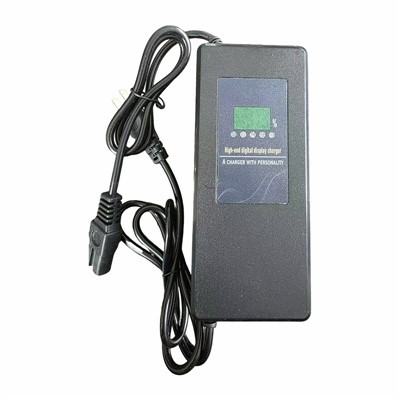
First, let’s start with the basics: not all lead acid battery chargers are created equal. Lead acid batteries come in three main types—flooded (the most common for cars, trucks, and small equipment), AGM (used in motorcycles, boats, and some modern cars), and gel cell (common in solar setups and mobility scooters). Each needs a specific charging profile; a generic charger meant for flooded batteries will overcharge AGM or gel cells, shortening their lifespan by years, or undercharge them, leaving them underpowered. That’s why so many people end up with a charger that doesn’t work for them—they buy the first thing they see without checking compatibility. Now, where do most people start their search? The big online marketplaces, of course—Amazon, eBay, even Walmart.com. Let’s be honest, convenience is hard to beat: you can order a charger at 2 a.m. and have it on your porch in two days. But here’s the catch: many of the chargers listed on these sites are made with cheap components, no quality testing, and no clear specifications about which battery types they work with. I’ve seen a 10A charger listed as compatible with both flooded and gel cells, with no indication that it only works with flooded—if you plug it into a gel cell, the battery’s internal electrolyte will overheat, and you’ll have to replace it in a month. That’s a $100 battery wasted because you saved $5 on a cheap charger. For small, occasional use (like charging a car battery once a year in the winter), a marketplace charger might work in a pinch, but it’s not a long-term solution. Plus, if something goes wrong—if the charger breaks after two uses, or if it damages your battery—you might be stuck with a return process that takes weeks, or no customer support at all.
Next up: auto parts stores. Places like AutoZone, O’Reilly Auto Parts, and Advance Auto Parts carry a range of lead acid battery chargers, from small trickle chargers for cars to larger models for trucks and RVs. This is a better option than big online marketplaces because you can go in, talk to a parts specialist, and show them your battery (or at least tell them what it’s for) to get a recommendation. I’ve had friends who work at these stores, and they tell me they help customers every day pick the right charger—for example, a farmer who needs to charge a deep-cycle battery for a tractor, or a boater with an AGM battery for their trolling motor. The downside here is that the selection is limited to what the store can stock, and prices are marked up because the store has to cover shelf space, staff, and shipping. A quality 10A charger that costs $80 from a direct supplier might cost $120 at an auto parts store, and you still don’t get the specialized advice or custom settings you might need for non-automotive batteries (like solar or mobility scooter batteries). Also, many auto parts store chargers are designed for short, occasional use—if you’re a fleet manager who needs to charge 20 batteries a week, these units will overheat and break down in a matter of months, because they’re not built for continuous, heavy use.
Then there are specialty battery retailers and equipment suppliers. Places that sell batteries for solar power, industrial equipment, or RVs often carry matching chargers, and that makes sense—they pair the charger with the battery to make sure it’s compatible. For example, if you buy a deep-cycle battery from a solar supplier, they’ll usually recommend a charger designed specifically for that type of battery, and some even sell them at a bundled discount. This is a solid option for people who have a specific, niche battery use case, but again, the selection is limited to what the supplier works with, and if you need a charger for a battery type they don’t carry, you’re out of luck. I’ve had a customer come to us last year who had bought a solar battery from a specialty supplier, and their charger died after six months; the supplier only carried chargers for that exact battery model, which was backordered for eight weeks, so they were stuck without power for their off-grid cabin. That’s a big problem when you rely on your battery for daily use.
Now, let’s talk about the option that most people don’t think about until they’ve had a bad experience: buying directly from a lead acid battery charger manufacturer or supplier. And yes, that’s where I’m going to talk about our own experience—because this is what I’ve learned after 12 years in this industry, working with customers from every corner: from small garage owners to large construction companies, from solar installers to fleet operators. When you buy direct, you’re not just getting a charger—you’re getting a product that’s designed, tested, and built specifically for lead acid batteries, with no middleman markup. Our chargers are engineered with adjustable charging profiles for flooded, AGM, and gel cell batteries, so you don’t have to guess which one is right for your setup. We use high-quality components—thermal cutoffs to prevent overheating, reverse polarity protection to stop you from hooking up the charger wrong, and robust circuits that can handle continuous use. For example, our 20A heavy-duty charger is built to charge multiple truck batteries a day, 5 days a week, and we back every unit with a 2-year warranty—something you won’t get from a $20 Amazon charger, and often not from auto parts store chargers either.
Another big advantage of buying direct is the customer support. I talk to customers every week who have questions, not just about which charger to buy, but about how to use it. Last month, a customer who runs a small moving company called us panicking because their new AGM tuck battery wasn’t holding a charge—turns out, they were using a generic charger that was set too high for AGM, and we walked them through how to adjust our charger’s profile in 2 minutes. When you buy direct, you don’t have to sift through forum posts or unhelpful chat bots—you talk to people who actually know lead acid batteries, because that’s all we do. We don’t sell anything else; our entire business is making chargers that extend the life of lead acid batteries, which means we know every detail about how they work, what they need, and how to keep them running well.
Let’s also address a common concern: “Is buying direct more expensive?” The short answer is no, when you compare apples to apples. A cheap Amazon charger might be $30, but if it dies in 3 months and ruins a $100 battery, that’s $130 total, plus the hassle of returning items. Our mid-tier charger is $85, comes with a 2-year warranty, is compatible with all three lead acid battery types, and will last 5+ years with regular use. That’s a much better long-term investment for anyone who uses their battery regularly. For bulk orders—like a fleet of 50 trucks, or a solar installation with 20 batteries—we offer volume discounts that beat auto parts stores and online marketplaces by a significant margin, because we don’t have to mark up for middlemen. We also offer custom chargers for specific needs; if someone needs a charger for a rare lead acid battery used in industrial equipment, we can work with them to design a unit that fits their exact specifications, something no big retailer will do.
Now, let’s break down who should buy from where, to make this concrete. If you only need a temporary charger for a car battery that dies once a year in the winter, and you don’t care about long-term use, a big online marketplace is fine as a last resort. But if you use lead acid batteries regularly—for work, solar, RVs, mobility scooters, or any ongoing use—buying from a specialty retailer or direct supplier is the better choice. For people who want reliability, good support, and a product built to last, direct from a lead acid battery charger supplier is often the best.
I’ll leave you with a quick tip that I wish someone had told me when I first started in this industry: never buy a charger that doesn’t clearly list the battery types it works with, and never buy a unit that doesn’t have safety features like reverse polarity protection and thermal cutoff. Those are non-negotiable for keeping your battery (and your space) safe. If you’ve had a bad experience with a cheap charger in the past, or if you’re not sure which charger is right for your battery, reach out to a trusted supplier. Whether you work with us or another reputable supplier, taking the time to get the right charger will save you money, time, and the headache of dealing with dead batteries and damaged equipment down the line.

If you’re ready to find a charger that works for your needs, feel free to connect to discuss your specific requirements—whether you need a charger for a personal vehicle, a fleet, solar setup, or industrial equipment. We’re here to help you pick the right product, answer any questions you have, and make sure you get the most out of your lead acid batteries.
Battery Charger References:
- Battery University. Lead Acid Battery Charging Fundamentals. Cadex Electronics Inc.
- Automotive Parts Association. Lead Acid Battery Charger Safety Standards. National Highway Traffic Safety Administration.
- International Standards Organization. Stationary Lead Acid Battery Charger Specifications. ISO 1401.
- Solar Energy Industries Association. Deep Cycle Lead Acid Battery Charging Best Practices. SEIA.
- Fleet Maintenance Magazine. Heavy-Duty Battery Charger Selection Guidelines. Endeavor Business Media.
Tianchang Hengze Technology Co., Ltd.
With abundant experience, we are one of the most professional lead acid battery charger manufacturers and suppliers in China. Please rest assured to buy bulk lead acid battery charger made in China here from our factory. If you have any enquiry about quotation, please feel free to email us.
Address: No. 8 Sanxing Road, Qinlan Town Industrial Park, Tianchang City, Chuzhou City, Anhui Province, P.R. China
E-mail: 604894957@qq.com
WebSite: https://www.hengzebc.com/
