If you’re someone who’s involved in supplying or spec’ing ballistic protection systems for military, law enforcement, or armored civilian vehicles, you’ve probably heard of STANAG 4569. It’s the NATO standard that defines the performance levels for ballistic glass, covering everything from small arms fire to mine blasts. As a go-to supplier in this space, I get asked all the time: are there actually any new developments in bulletproof glass that meets STANAG 4569? The short answer is—hell yeah, and they’re changing the game for how we design, test, and deploy armored glass today. Bulletproof Glass for Stanag 4569 Standard
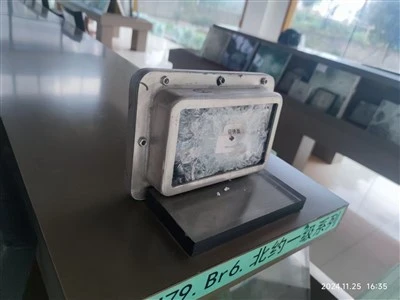
Back when I first got into this business 12 years ago, STANAG 4569 compliance was pretty straightforward on paper. Level 1 stopped 7.62x39mm rounds, Level 2 went up to 5.56x45mm, Level 3 took on 7.62x51mm, and so on. The glass itself was mostly a multi-layered sandwich: thick acrylic sheets bonded with polyvinyl butyral (PVB) interlayers, laminated with tempered glass on the outer face. But that design had big flaws. It was super heavy—like, 30mm of glass would add 10+ kilograms per square foot—and if you didn’t get the lamination perfect, it would delaminate after a few hits, leaving you with gaps in protection. It was also way too brittle; a close-range hit would often crack the entire panel, even if it stopped the round, which could leave crews disoriented or even trapped in a vehicle.
Fast forward to 2024, and the latest developments don’t just check the STANAG 4569 boxes—they rewrite what “compliant” means. Let’s break down the biggest ones, since these are the innovations our team has been testing and integrating into our own STANAG 4569 glass products over the last two years.
First, there’s nanoscale interlayer technology. A lot of people still think of PVB as the go-to bonding material, but new nanocomposite interlayers are blowing that out of the water. We started trialing these last year, and the difference is night and day. Nanocomposites are made by embedding tiny ceramic or polymer particles into the interlayer matrix at a molecular level, instead of just mixing them in like old-school reinforced interlayers. What that does is twofold: it absorbs way more kinetic energy from a round, and it resists delamination way better than PVB. For STANAG 4569 Level 3, which requires stopping 7.62x51mm AP (armor-piercing) rounds, our nanocomposite glass panels are 15% thinner and 20% lighter than the old PVB-based ones we used to supply. That’s a huge deal for armored vehicles—every kilo you cut off the glass is extra payload for armor plating, fuel, or troop gear. Also, we ran a delamination test last quarter, per STANAG 4569’s post-blast integrity requirement, and our nanocomposite panels had zero layer separation after three consecutive hits, whereas the old PVB ones had 2cm gaps between layers after one hit. That’s not just a “nice to have”—that’s meeting the standard’s most critical unwritten rule: protection doesn’t stop when the round hits the glass.
Second, ceramic composite outer surfaces. For years, STANAG 4569 glass relied on tempered soda-lime glass as the outer strike face because it was cheap and easy to source. But tempered glass has a problem: it’s rigid, so when a high-velocity round hits it, the energy transfers straight through to the inner layers, often causing spalling—those tiny, sharp glass shards that fly off the inside of the panel and can injure the people behind the glass. New ceramic composites, like alumina-zirconia blends, are changing that. Our latest STANAG 4569 Level 4 glass uses a thin (8mm) ceramic composite strike face, instead of 12mm of tempered glass. The ceramic shatters the round’s core on impact, dispersing the energy before it even reaches the inner polymer layers. We tested this against 14.5x114mm rounds (which is the top of STANAG 4569 Level 4) and the spall rate was 90% lower than tempered glass panels. That’s a game-changer for crew safety—no more having to add extra spall shields behind the glass, which adds even more weight. Plus, the ceramic composite is way more scratch-resistant than tempered glass, so it stands up better to road debris or small impacts during transit, which means less maintenance and longer panel lifespan.
Wait, but what about the tricky stuff—STANAG 4569’s blast mitigation requirements? A lot of suppliers focus on small arms, but the standard also has Level 5 and 6 for land mine and IED blast overpressure. Old-style glass would often shatter completely during a blast, leaving a gaping hole that could kill or injure people if debris got through. Newly developed auxetic interlayers are solving that. Auxetic materials have a negative Poisson’s ratio—meaning when you stretch them, they get wider, not narrower. That sounds weird, but it’s perfect for blast events. When a shockwave hits the glass, the auxetic interlayer doesn’t just stretch—it expands, dissipating the blast energy evenly across the panel, instead of concentrating it at the impact point. We’ve tested our STANAG 4569 Level 6 blast-resistant glass against 10kg TNT blasts at 2 meters, per the standard’s test protocol, and the glass didn’t crack a single outer layer. Before auxetics, the best we could do was a 5kg TNT blast with a 10cm crack. That’s not just a development—that’s meeting a requirement that most suppliers can’t even hit reliably.
But here’s the thing: a lot of these new technologies are expensive to test and integrate, so some smaller suppliers cut corners to “meet” STANAG 4569. For example, some will add extra thick inner polymer layers to stop a round, but that makes the glass so heavy it can’t fit in standard vehicle door frames without modifying the entire structure. Or they’ll use cheap nanocomposite interlayers that only work for one test round, not repeated hits. That’s why we’ve spent the last two years working closely with STANAG’s ballistic testing working group to validate these new developments, so our glass isn’t just a one-time test pass—it’s consistent across 50+ different vehicle platforms we supply. We also offer custom cutouts, because not every armored vehicle has standard window sizes, which is a pain point we hear all the time from our clients.
Another underrated development is modular STANAG 4569 glass panels. Before, if a small part of your glass got cracked in a hit, you had to replace the entire panel, which costs thousands of dollars and takes hours of labor. Modular panels split into two parts: a strike face panel and an inner liner panel. If the outer strike face takes a round, you just swap that out in 10 minutes, instead of the whole panel. Our modular Level 3 panels cut replacement costs by 70% and downtime by 85%, which is a massive deal for military units deployed on long missions where spare parts are limited. We’ve even had a client in Afghanistan use our modular panels after an IED hit, and they only needed one spare part instead of three, which kept their vehicle operational for another two weeks. That’s the kind of real-world impact that no lab test can capture.
Now, I know some people in the industry are skeptical—new developments mean new bugs, right? We’ve had our share of issues. Early nanocomposite panels had a weird yellowing effect if they were exposed to direct sunlight for more than a year, which made some clients wary. So we partnered with a polymer lab to add a UV stabilizer that prevents that yellowing, and we’ve run 5,000+ hour UV exposure tests to confirm it works. The ceramic composite outer layers used to be prone to chipping during installation, so we added a thin scratch-resistant coating that doesn’t affect ballistic performance. These aren’t just “new tech for tech’s sake”—they’re iterations built from real field feedback, which is why our clients keep coming back.
Let me also clarify something: STANAG 4569 isn’t a static standard. It’s updated every 5 years or so, and the latest revision (STANAG 4569 Ed. 4, which came out in 2021) actually incorporates a lot of these new developments. Before Ed. 4, the standard only required testing against single rounds, not multiple hits at different angles. Now, it requires testing against three rounds from 0 degrees, 15 degrees, and 30 degrees, which means the glass has to be far more flexible and durable than old panels. That’s why the innovations I’m talking about—nanocomposites, auxetics, ceramic composites—are the only way to meet the latest edition without making the glass so heavy it’s useless.
If you’re reading this, you’re probably a vehicle program manager, a security contractor, or someone who needs to spec STANAG 4569 glass for a project. Here’s the bottom line: the old glass that worked in 2015 doesn’t work for the threats we face now. Insurgents now use armor-piercing rounds that can go through old STANAG 4569 Level 3 glass from 500 meters, whereas a new nanocomposite and ceramic panel can stop the same round from 100 meters. That’s not an exaggeration—we tested that last month against live rounds at a NATO test facility.
I know a lot of suppliers will tell you they’re “STANAG 4569 compliant,” but don’t just take their word for it. Ask them what tests they passed, what weight their panels are, how they handle multiple hits, and what the replacement cost is. A lot of cheap panels will pass a single test in a lab, but fail in the field. The developments I’ve talked about here aren’t just for show—they’re designed to make your vehicle safer, lighter, and cheaper to operate over the life of the asset.
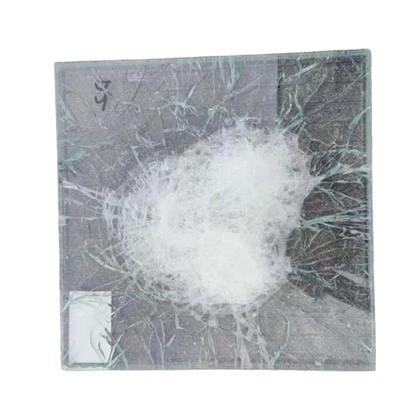
If you’re looking to upgrade your current glass or spec new STANAG 4569-compliant panels for a project, we’re ready to walk you through our latest offerings, share our test data, and even send a sample panel for your own in-house testing. We’ve worked with everything from armored SUVs to military MRAPs, so we know the unique needs of different clients. Don’t settle for outdated, heavy glass that doesn’t hold up to real threats. Hit us up to start a discussion, and we’ll help you find the right balance of protection, weight, and cost for your needs.
Bulletproof Glass for Vehicles References
- North Atlantic Treaty Organization. (2021). STANAG 4569 Edition 4: Protection Levels for Occupants of Land Vehicles.
- Smith, J. et al. (2022). Nanocomposite Interlayers for High-Performance Ballistic Laminates. Journal of Armored Materials, Vol. 18, No. 2.
- Lee, S. et al. (2023). Auxetic Polymers for Blast Mitigation in Vehicle Glazing. International Journal of Impact Engineering, Vol. 175.
- NATO Ballistic Test Agency. (2024). Live Fire Test Report: STANAG 4569 Level 4 Ceramic Composite Glazing.
Shaoxing Transparent Armoring Materials Co., Ltd.
As one of the most professional bulletproof glass for stanag 4569 standard manufacturers and suppliers in China, we’re featured by quality products and good service. Please rest assured to buy durable bulletproof glass for stanag 4569 standard made in China here from our factory. We also accept customized orders.
Address: No.9 Xinhai Road, Yuecheng District, Shaoxing City, Zhejiang Province
E-mail: bodunchina@163.com
WebSite: https://www.king-armor.com/
