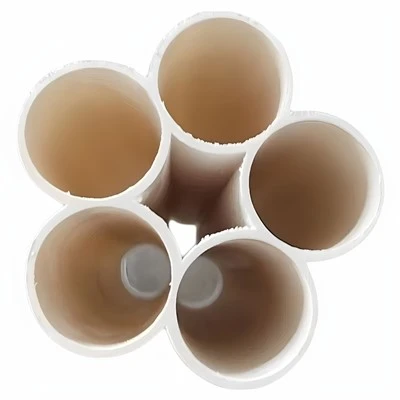
Pressure drop in PVC pipes is a crucial concept that significantly impacts the performance and efficiency of fluid transportation systems. As a supplier of PVC pipes and fittings, understanding the intricacies of pressure drop is essential for providing our customers with the best solutions for their projects. PVC Pipe & Fittings
Understanding Pressure Drop
Pressure drop refers to the decrease in pressure that occurs as a fluid flows through a pipe. This phenomenon is a natural consequence of the resistance encountered by the fluid as it moves along the pipe’s interior. In PVC pipes, several factors contribute to this resistance, including the pipe’s length, diameter, roughness of the inner surface, and the velocity and viscosity of the fluid.
The length of the pipe plays a direct role in pressure drop. As the fluid travels a longer distance, it experiences more friction against the pipe walls, leading to a greater reduction in pressure. For example, in a long – running irrigation system, the pressure at the end of the PVC pipe network will be significantly lower compared to the pressure at the source if the system is not properly designed.
The diameter of the pipe also has a substantial impact. A smaller diameter pipe restricts the flow of the fluid, causing it to move at a higher velocity. According to the principles of fluid mechanics, higher velocity leads to increased frictional losses and, consequently, a larger pressure drop. On the other hand, a larger diameter pipe allows the fluid to flow more freely, reducing the velocity and minimizing the pressure drop.
The roughness of the inner surface of the PVC pipe affects the flow characteristics of the fluid. Although PVC pipes are generally known for their smooth interior, over time, deposits or scratches can develop, increasing the surface roughness. This roughness creates additional turbulence in the fluid flow, which in turn raises the frictional resistance and pressure drop.
The properties of the fluid itself, such as its velocity and viscosity, are also important factors. A fluid with a higher velocity will have more kinetic energy that is dissipated as it moves through the pipe, resulting in a greater pressure drop. Viscosity, which measures the fluid’s resistance to flow, also influences pressure drop. More viscous fluids require more energy to flow through the pipe, leading to higher pressure losses.
Measuring and Calculating Pressure Drop
Accurately measuring and calculating pressure drop is vital for designing efficient PVC pipe systems. There are several methods and equations available for this purpose.
One of the most commonly used equations for calculating pressure drop in pipes is the Darcy – Weisbach equation:
[ \Delta P = f \frac{L}{D} \frac{\rho v^{2}}{2} ]
where (\Delta P) is the pressure drop, (f) is the Darcy friction factor, (L) is the length of the pipe, (D) is the diameter of the pipe, (\rho) is the density of the fluid, and (v) is the average velocity of the fluid.
The Darcy friction factor (f) depends on the Reynolds number ((Re)) and the relative roughness of the pipe. The Reynolds number is a dimensionless quantity that characterizes the flow regime (laminar or turbulent) of the fluid in the pipe and is calculated as:
[ Re=\frac{\rho v D}{\mu} ]
where (\mu) is the dynamic viscosity of the fluid.
In laminar flow ((Re < 2000)), the Darcy friction factor can be calculated using the formula (f=\frac{64}{Re}). In turbulent flow ((Re>4000)), the friction factor is more complex to determine and often requires the use of empirical correlations or Moody charts.
In addition to the Darcy – Weisbach equation, there are other simplified equations for specific applications. For example, the Hazen – Williams equation is commonly used for water flow in PVC pipes:
[ h_{L}=10.67\frac{Q^{1.85}}{C^{1.85}D^{4.87}}L ]
where (h_{L}) is the head loss (equivalent to pressure drop), (Q) is the flow rate, (C) is the Hazen – Williams coefficient (which is a measure of the pipe’s roughness, typically around 150 for new PVC pipes), (D) is the pipe diameter, and (L) is the pipe length.
Impact of Pressure Drop on PVC Pipe Systems
The presence of pressure drop in PVC pipe systems can have several negative consequences if not properly managed.
One of the main issues is a reduction in flow rate. As the pressure decreases along the length of the pipe, the driving force for the fluid to flow is diminished. This can lead to insufficient water supply in plumbing systems, lower irrigation efficiency in agricultural applications, and reduced performance in industrial processes that rely on fluid transportation.
Pressure drop can also cause problems with the operation of equipment connected to the pipe system. For example, in a sprinkler system, low pressure at the sprinkler heads can result in uneven water distribution and poor coverage. In a pumping system, excessive pressure drop can increase the workload on the pump, leading to higher energy consumption and potentially premature pump failure.
Another concern is the potential for pipe damage. High – pressure drops can create large pressure differentials within the pipe system. If these differentials are too large, they can cause stress on the pipe walls, increasing the risk of leaks or even pipe bursts, especially at joints or weak points.
Mitigating Pressure Drop in PVC Pipe Systems
Fortunately, there are several strategies that can be employed to minimize pressure drop in PVC pipe systems.
One of the simplest ways is to select the appropriate pipe diameter. By choosing a larger diameter pipe, the velocity of the fluid can be reduced, which in turn decreases the frictional losses and pressure drop. However, it is important to balance the benefits of a larger diameter pipe with the increased cost of materials.
Proper pipe layout and routing can also help reduce pressure drop. Minimizing the number of bends, elbows, and other fittings in the pipe system can decrease the turbulence and resistance in the fluid flow. When using fittings, it is advisable to choose ones with a low – resistance design.
Maintaining the pipe’s interior is crucial. Regular cleaning of PVC pipes can prevent the buildup of deposits that can increase surface roughness and pressure drop. Additionally, avoiding scratches or damage to the pipe during installation can help preserve its smooth inner surface.
In some cases, additional components such as pumps or boosters may be required to compensate for pressure drop. These devices can increase the pressure of the fluid at strategic points in the system, ensuring that there is sufficient pressure to maintain the desired flow rate.
Our Role as a PVC Pipe & Fittings Supplier
As a supplier of PVC pipes and fittings, we play a crucial role in helping our customers understand and manage pressure drop in their pipe systems.
We offer a wide range of PVC pipes with different diameters and wall thicknesses to suit various applications. Our technical team can provide expert advice on selecting the most appropriate pipe size based on the specific requirements of the project, taking into account factors such as flow rate, pressure requirements, and pipe length.
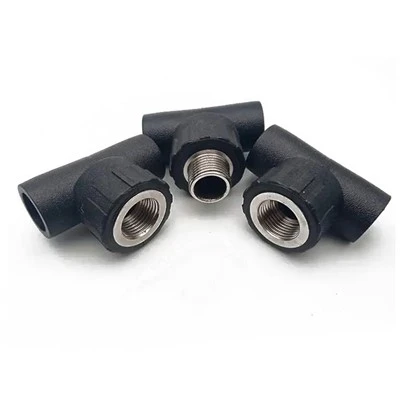
In addition to pipes, we supply a comprehensive range of fittings, including elbows, tees, couplings, and reducers. Our fittings are designed to minimize turbulence and pressure drop, ensuring smooth fluid flow through the pipe system.
We also offer installation guidance and support to our customers. Our experienced staff can help with the proper layout and routing of pipes, as well as the correct installation of fittings, to reduce pressure drop and ensure the long – term performance of the system.
HDPE Pipes and Fittings If you are facing challenges with pressure drop in your PVC pipe system or are planning a new project, we are here to help. Our team of experts can provide you with personalized solutions and high – quality products to meet your needs. Contact us to discuss your requirements and start a procurement negotiation. We look forward to working with you to create efficient and reliable PVC pipe systems.
References
- Crane Company. (1988). Flow of Fluids Through Valves, Fittings, and Pipe. Technical Paper No. 410M.
- Munson, B. R., Young, D. F., & Okiishi, T. H. (2009). Fundamentals of Fluid Mechanics. John Wiley & Sons.
- Streeter, V. L., & Wylie, E. B. (1981). Fluid Mechanics. McGraw – Hill.
Shanxi Kaisheng Plastic Co., Ltd.
Shanxi Kaisheng Plastic Co., Ltd. is one of the most professional PVC pipe & fittings manufacturers and suppliers in China, featured by quality products and good price. Welcome to buy durable PVC pipe & fittings made in China here and get quotation from our factory. We also accept customized orders.
Address: No. 72, Area S, Gate 1, Haohai Wumart, Fendong Street, Xiaodian District, Taiyuan City, Shanxi Province
E-mail: sxkssj8@163.com
WebSite: https://www.sxksgys.com/
